The Obankruptcy of America

Tuesday, July 21, 2009

Our government has a worst-case scenario estimate of the total, long-term cost of federal government support of troubled firms and markets. It’s $23.7 trillion, with a “t.” This is not to say that the economy will need this level of support, but only that we’ve made commitments which could, conceivably, end up costing us this much. (See Politico’s piece by Eamon Javers, July 20, 2009, “Bailouts could cost US $23 trillion”, which will help put this number in perspective.)

Breathtaking, isn’t it? Overstated? Maybe. The Treasury Department says we’ve spent less than $2 trillion so far. Chump change by Obama standards.

In case anyone doubted that we’re in a financial crisis, we are and its name is “President Barack Obama.”

Maybe it’s his naïveté, his almost complete lack of fiscal and administrative management experience. Maybe he’s blinded by the light of a liberalism so profoundly simpleminded, it gives Liberals a bad name. That he has a sincere commitment to making America better, to fixing the multitude of our problems is not an excuse for the mess his level of spending and government interference with the economy will eventually cause.

We elected Barack Obama President of the United States government. He’s been hired, by “We, the People,” to manage our government for us. He is not the President of the Economy, if there were such a position, and he needs to get it out of his head that he can run it, the economy that is.

They say that the greatest mistake any salesman can make, even the very best, is to believe his own hype. “Yes we can!” was a good, very effective campaign slogan, but it’s time for a reality check. The election’s over. It’s time for Barack Obama to stop campaigning and start managing the government.

Whatever the precise causes of his fiscal recklessness, it’s got to stop. Either he comes to his senses and gets it out of his head that “money is no object” government isn’t tenable or, simply put, it’s up to the Republicans and some Democrats in Congress to provide the checks and balances which are their Constitutional responsibility.

If they’re not up to it or need our help, the good news is that there’s another election just 15 months from now.

-wf


Site Meter

President Obama’s Brain: Panic, Inexperience and Overly Complicated

Tuesday, July 21, 2009

I’ll be really brief. (My Corn Flakes are getting soggy.) I believe in the intelligence of my readers. Most of you will fill in the blanks. Others, well, won’t realize there are any blanks, so it won’t make any difference.

First example: President Obama’s program for healthcare reform is a mess. Grotesquely too complicated and way too costly, as far as we can tell, in ways we can’t fully calculate yet. Interferes with established markets with who knows what impact. Difficult to impossible to administer. Yada, yada, yada.

Alternative, much simpler solution: (1) Ask the medical profession to define the minimum coverage Americans should have. (2) Ask the medical profession and insurance underwriters to define the cost of that coverage – provided exclusively by the private sector. No profiteering, please. (3) Give the money for that coverage to people who can’t afford it. (“Honey, would you put my English muffin down again? …Thanks.” I make a kissing noise with my mouth without looking up so as not to interrupt my typing.)

Second example: The economy is in trouble due, in part, to the irresponsible behavior of many of our nation’s leading financial institutions. “Oh my God!!” our new President says to himself, giving out k-billions of dollars in bailout money to solve problems the economy would have resolved more effectively and far less expensively on its own. To paraphrase Admiral Farragut, “Damn the budget deficit, full speed ahead! Who wants bailout money?” (Personally, I get a kick out of imagining President Obama wearing one of those old horizontal Admiral’s hats.)

Flash forward just 6 months… Many of the same companies are showing huge multi-billion dollar profits and are returning to their pre-bailout ways. “Way to go, President Obama!”

Oh, and did I forget to mention that he’s only managed to spend $90 billion – some of it still in “the pipeline” which, for the government, is a lot like having a fur ball – of the $787 billion he insisted he needed on an emergency basis to save the economy?

Okay, my English muffin is getting cold, and the fake, high-in-Omega-3s butter my wife buys me won’t be melting in the nooks and crannies anytime soon. And that’s where I draw the line. You’re on your own. Good luck.

-wf


Site Meter

Stillborn

Short Fiction for Guests of the WordFeeder
Monday, July 20, 2009

Except for a few details, this is a true accounting
of actual events as told to the WordFeeder by one of the principals
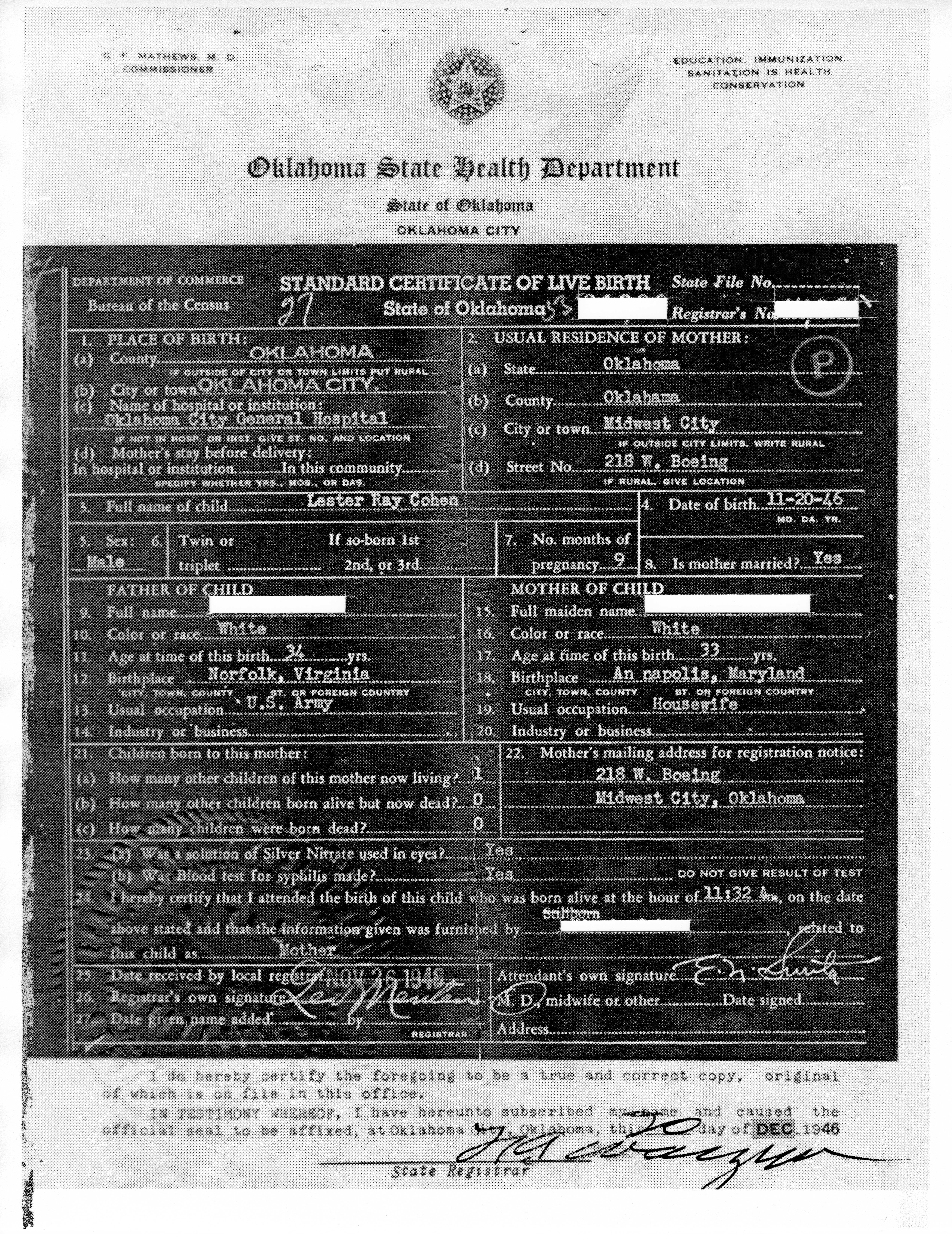
in the story you are about to read. The embedded birth certificate has
been redacted to protect the identity of one of the principals
and his family, but is nonetheless real.

“So did ja read it yet?” It was Stallings habit to come into his colleague’s office without knocking, and tonight was no exception. Knocking conveyed a certain respect that might suggest that he and you were equal, and that wasn’t something he would ever concede.

“Read what?” Penelope responded, not bothering to look up. Looking up would let her intruder conclude that he could command her attention which he could, but only if she let him.

There’s was a world in which everything counted.

They had slept together… Wait. No, that’s too romantic a way to put it. More like they had sex together once over a year ago. Her team had been going nonstop, around the clock on a special project. No sleep. Lots of pizza. They both needed a break and took it on her couch. Twenty minutes later, they were back to work.

“This,” he told her, throwing a classified file on her desk, causing the two short piles she had in front of her to mush together as it landed, covering up the form she was filling out when he’d walked in.

“Hey!! You think maybe you shouldn’t piss off the superior who writes your evaluations?!” Her voice was calm enough, but she wasn’t kidding… and he knew it. “What is this?” she asked, still not looking at him, turning in her chair to put her shoeless feet, crossed at her ankles, on the corner of her desk she kept clear for just that reason.

“An entry level NSA researcher picked it up off some guy’s family blog when it tested positive for the query we sent them.”

“Remind me…”

“The one that looks for references to suspect births, 1940 to 1950, that meet the profile our psycho-bananas consultant gave us.

“You know, I’ve never seen him without his lab coat.” It was rhetorical observation not meant to solicit a response, her eyes skimming the disclaimer on the cover sheet, paying special attention to the signatures of those who had seen it recently. “Where was this one?”

“Oklahoma. 1946. It was part of a memoir written by his mother when she was gravely ill, about a time when she was a delivery nurse, just after the war. Take a look. I’ll get us some coffee.” And he left.

Opening the folder, it seemed for a moment that she couldn’t move her eyes off the title, but she did and read the copy of the handwritten text the blogger had published. His mother was from an age before computers, and had never learned to type. Her penmanship was steady, deliberate and easy to read despite the woman’s advanced age and condition.

Oklahoma City, November 20, 1946, just after 10 AM.

It had been a slow shift since I had come on at 8 when it was still cool enough that the air flowing from the open double doors at the end of the corridor near the maternity ward made the place bearable. Later on that day, not even the large floor fans we had would keep me and the other staff from perspiring through the starched white outfits which were required wearing at the time. I remember that day because it was unseasonably hot, but mostly because of the one military couple that came in from Tinker Field whose delivery made me question what I believed and, more importantly, what I didn’t. You know, son, I’ve never been a particularly religious person. Looking back now that I face the end of me, this is the one event in all the years that makes me question whether or not I might have missed something.

They were in their early thirties. He was a Captain in new Air Force they created after the war. With nothing more than a simple infirmary on the base, he had taken the chance to drive his wife to our hospital, fearing that, if it was a problem delivery, the corpsmen at Tinker wouldn’t be able to handle it. It was a risky decision given her condition and the distance, but these were determined people. The mother, in particular, was going to have her child, regardless of the cost. What irony that the Captain had survived three years in the war unscathed, only to come back to have his wife’s life threatened by something so routine as the birth of their second child.

She was a slight woman, barely 5 feet tall, weighing just 100 pounds before she had become pregnant. Labor had actually started more than a day earlier, slowly, with its intensity and the timing of contractions coming and going unevenly. When she arrived, we found her in agony, writhing in pain. The child, still inside her, was huge relative to her size, and was cavorting, turning and rolling, fighting to get out. Nowadays, they would have done a Cesarean, but not then. For whatever reasons, the doctor agreed to a vaginal birth.

As was the habit at that time, the Captain stayed in the waiting room while his wife fought alone, with the doctor, me and another nurse, to push out her son. After what wasn’t more than 20 minutes, the wife began to deteriorate, the medications we had given her having done little to resolve the difficult situation in which she and her baby found themselves. Even without the monitors and other technology we have now, it was clear they were both in serious trouble. Sending the other nurse for a second doctor to assist him if necessary, the attending went into the waiting room, just outside, to speak to the Captain.

So quickly had the doctor been moving that the swinging door to the delivery room had become stuck open, and I could see the Captain rising to his feet. Fearing the loss of the baby, or the mother, or both, the doctor asked the Captain, if it were it necessary to make the choice, should he save his wife or child. It was a question he had to ask, given the religious beliefs of some of our patients, but these were Jewish people and I’m not sure it was a problem for them. I remember the Captain looking past the doctor, into the delivery room, the full weight of what he would say clear on his face. “You save my wife, doctor,” he said without the least uncertainty in his voice, turning his head to face the physician to make sure his decision was clear. “Save my wife.” (I remember wondering later if I would ever hear a more profound statement of love given what he stood to lose. Whatever his beliefs, they served him well.) His voice was resolute, its sound hanging in the warm air while his eyes followed the doctor who rushed back into the delivery room, the second doctor and the other nurse almost running down the hall right behind him.

Half an hour later, it was over. The lifeless body of their son lay unceremoniously on bloody towels in a tray on a table along the far wall while we continued to help the mother. The other nurse, so affected by the loss of the child, left to start the paperwork, so she said, but no one could blame her, and I did my job trying not to look up and across the room.

It was then, son, a full five, maybe 10 minutes after the delivery, that I heard… no felt is more like it, the sound of a hand reaching into my head, as if to pull my mind toward it. I felt panic and fear, not that I had felt before, but what I realize now was the dread and sadness of pending death. I felt life slipping away uncontrollably – I cannot, even today, explain the power of this calling, the memory of which time has done nothing but enhance. – and found myself drawn away from the wife, semi-conscious on the delivery table, to the baby, still motionless where the doctor had laid him to rest.

What I did next was by compulsion, by the instructions of an unseen intelligence, something so primal and yet so compelling, I had no choice. Picking up the child, still wet from the delivery, I shook it violently, back and forth in front of me, and then I stopped. The doctors were no doubt alarmed, but I wasn’t paying attention, not to them, still holding the body of the baby a foot in front of me. And then, as if nothing had happened, his head shook back and forth on its own, his eyes, never cleaned after birth, opened, and his color began to normalize, his legs and arms beginning to move normally. And the fist in my head went away as suddenly as it had arrived.

I was surprised, pleasantly so, to find out years later that the child had not only survived, but appeared to be normal in all respects and, in fact, quite intelligent. You had to have been there, son. Far from thinking these to be the ravings of a sick old woman, it was, as you’re fond of saying, an experience you can take to the bank. I’ve seen an old photostat of his birth certificate, the word “stillborn” typed in, then crossed out. (I’ve enclosed that copy for you to see. Take good care of it.) Make what you want of what I have told you, but it was real and says something, although I don’t know what, about the human condition and about a certain power we may all have within us.

“Well,” Stallings asked on his way back into her office, the frosted glass door to her office still closing behind him. “What do you think?”

“I think it’s a curious story, that we should get a copy of the birth certificate and see where it takes us, but that Beaker,” her pet name for their scientist consultant, “has his pocket protector up his ass.”

“Here,” he said, reaching across her desk to hand her the coffee he promised, the sound of his voice muffled by the oversized bite of the cinnamon bun he was holding. “Want some?”

“What, after you’ve had your mouth on it?”

“That didn’t used to bother you.”

“Jeeze, you’re so repulsive sometimes,” she spoke honestly and quickly which was always her style. “What about the birth certificate?” She didn’t have time for his nonsense.

“Gone. Missing. The son never got it, and the original’s long gone.”

“Okay, trace the kid through his father’s military record. There couldn’t have been that many Jewish Captains at Tinker Field on that day in November. And do it yourself,” meaning, as Stallings knew she did, that he should keep it to himself, entirely on computer if possible, without hinting at the importance of any inquiries he’d have to make.

“I’ll take care of it. …You don’t buy this theory about near death birth experiences, do you?” Stallings asked a serious question, trying to get back into her good graces by focusing on the task at hand.

“Beaker says that there’s a kernel of intelligence, a core life force in our brains that is the last thing of us to die, that cries out at the end in one last desperate attempt to get help. That I’m willing to buy, but can a near death event ignite something, some special capability in an infant? Can that child grow up, perfecting its ability to reach out to other minds, to become our mission’s target?”

“The one that comes and goes, and can never be killed?” Stallings recited the popular legend. “The one with telepathic powers and who can move things with his mind?”

“Yeh, that one. Telepathy, maybe, using very low power bio-chemically produced electromagnetic waves, having perfected his ability to control and interpret their frequencies. Maybe. Telekinesis, on the other hand would require substantial forces way beyond what any human can produce outside the SyFy channel.” Clearly annoyed by it all, she was busy reorganizing the papers on her desk. “I think it’s an agency myth and that we’re wasting my team’s time and money. Now get the fuck out of here and do your job.”

Standing up from the chair in the front of her desk, taking one last look at the front of the sleeveless t-shirt was wearing – because he was a creep and couldn’t help himself – he turned toward the door only to be surprised by the man, in his early 60s, standing inside Penelope’s office just a few feet in front of him. “Who.. When did you…,” and his mind went blank, his body, limp but still standing.

“Wait over there,” the man said pointing to the open space on the wall next to the bookcases. And that’s exactly what Stallings did, hugging the wall, his shoulders down as if he had been shamed by his third grade teacher, Mrs. Cronmiller, and told to stand in the corner.

“Hi, honey.”

“Hey, Dad.” By the smile on her face and way her eyes opened, it was clear she was glad to see him, although they talked frequently, even if there was no phone or e-mail involved. Even now, just in case someone was listening, everything he said and she asked or answered was in their heads, mind to mind. A sort of dampening field he radiated allowed him to move unnoticed by those who would see him. Her agency records said she had been adopted by a wonderful couple, now diseased, but made no mention of the man being her biological father.

“Is bozo going to be a problem?” he needed to know, for his own safety and hers as well.

“No. He won’t remember any of this, just what I want him to recall, and he won’t follow up. Besides, I’ve already fixed Grand Daddy’s military records.”

“Thanks, honey. Anything you need me to look into for you?”

“A couple of things. Why don’t you buy me dinner at that roadhouse you love, where the band is too loud for anyone to hear us, and we’ll talk about it?”

And he smiled back, knowing it would, as always, be the highlight of his day. Looking at Stallings, still standing there in the corner, he turned and opened the door, sending Agent Bozo through it and back to his office without his suspecting or remembering a thing.

-wf

What to read more? Just click here and pick a title you like.

Copyright as of the title date or earlier, by me.
(I write the WordFeeder blog.)  All rights reserved.
Email WordFeeder@verizon.net for additional information.

President Obama’s Ulterior Motive

Monday, July 20, 2009

In the vernacular of magic it’s called “prestidigitation,” literally “sleight of hand.” It’s all about distraction. Look here, not there.

Six months into his Presidency, someone needs to tell President Obama that he can stop running for office. He needs to stop campaigning and start managing the government. The problem is, campaigning is what he does best, and may be all he knows how to do.

Lately, President Obama has been all over the place campaigning for Congress to pass healthcare reform legislation by the August break – almost without regard for the effectiveness of that legislation or its costs. Not that healthcare reform – and universal healthcare, in particular – isn’t way overdue. It is. The problem is his obsessive concern about the timing of the legislation, as if getting it done according to his frankly arbitrary schedule is more important than the quality and affordability of the program Congress passes.

So why is he pressing so hard? Without a doubt, it’s because he sincerely believes that it’s important legislation and that he’s doing his best, however ineptly, to make it happen. But why be in such a hurry and so persistently high profile in his appeals to Congress and the American people? One explanation is that his campaign for healthcare reform has the benefit of distracting us from his Administration’s embarrassingly incompetent handling of the economy and the $787 billion of stimulus money Congress approved at his request. Five months since he demanded these funds on an emergency basis, only $90 billion has been spent, much of which is still in what they call “the pipeline,” and we all know what that means.

And then there are the billions and billions of dollars he’s wasted bailing out some of our major financial companies and buying General Motors.

Clearly, these are things he doesn’t want to talk about. The economy’s a mess and he’s done precious little about it while putting us even deeper into debt in the process.

Fiscal and program management are not something he’s good at. Talking, yes. He’s an exceptionally good speaker delivering very well written material. Unfortunately, his performance as President has been disappointing, to say the least, although entirely consistent with what you would expect from someone with his minimal management experience. It took the head of the Congressional Budget Office to point out that his Administration’s healthcare proposal doesn’t make financial sense, a conclusion which he does not dispute. Shouldn’t his advisors have worked through the economics of their own program more carefully first, before submitting it for Congressional review and approval? Why hasn’t he been able to spend $697 billion of the $787 billion of stimulus money Congress approved? Shouldn’t the latter be his highest priority?

Well, let’s see… He can’t talk about his performance over his first 6 months office because he hasn’t accomplished anything, and he doesn’t know what to do about the economy except wait for it to recover on its own and then take credit for it. And he doesn’t want to talk about the additional troops he’s pouring into Afghanistan. So what does that leave, but to distract us by scolding Congress and campaigning directly to the American people to prove he’s on top of healthcare reform? (On top of a badly flawed program that needs more work than anyone should reasonably expect Congress to accomplish in the next 10 days?)

The question is, given the record of his Presidency to date, why should we believe his emergency healthcare legislation will be any better conceived, cost effective and well managed than his program for economic recovery?

Let’s hope he’s learning from his mistakes. In the meantime, when President Obama talks about this, maybe we should be taking a closer look at that.

-wf


Site Meter

Where is Walter now that we need him?

Saturday, July 18, 2009

I write occasionally about the media, about its role in making the news instead of just reporting it. It is a time, especially in television news, marked by an hysteria for ratings in which what they choose not to report can be more important, more influential by its omission, than what they do. It is an age of communications technology in which everything counts. It’s way too easy, even inadvertently, not to mention on purpose, to affect public opinion beyond what a fair and straightforward presentation of the facts would accomplish.

Walter Cronkite once said,

“It’s the journalists’ job, should be our motto, to tell people what they need to know. Scandal sheets tell them what they think they want to know. That’s not our job. It is our job to determine what’s important in the daily news and make sure it’s communicated so people understand its importance.”

The Devil, as usual, is in the details. It’s that part about determining what’s important that demands a level of integrity, an honesty and open mindedness which may be too much to expect from even the best nowadays. At the very least, Walter Cronkite leaves us with standards by which we can measure his successors.

Reporting should be about telling the people “what they need to know, not what they want to know,” as he put it even more succinctly in another interview.

I couldn’t agree more and wonder whether today’s news editors and media executives get the point.

-wf

Recent postings about the media…
“Preoccupation with Palin”, posted July 13, 2009.
“Michael Jackson: Is anybody really this popular?”, posted July 7, 2009.


Site Meter

Quote of the Day: 1,000+ pages and counting.*

Friday, July 17, 2009

Excerpted from the Wall Street Journal’s article by Greg Hitt, “Budget Blow for Health Plan”, July 17, 2009.

“We do not see the sort of fundamental changes that would be necessary to reduce the trajectory of federal health spending by a significant amount,” Douglas Elmendorf, director of the Congressional Budget Office, told the Senate Budget Committee. “On the contrary, the legislation significantly expands the federal responsibility for health-care costs,” he added.

Who do the President and Congressional Democrats think they’re kidding? Apparently, not Mr. Elmendorf.

By the way, regarding the President’s resistance to the notion that employer-paid healthcare insurance benefits should be taxed to help pay for the costs of universal health insurance… None of us needs additional taxes, to be sure, but fair is fair and we need to be practical. We need to keep mind that people who purchase their own healthcare insurance are paying for that coverage with after-tax dollars. Medical insurance isn’t tax free for them. Why should it be for people with employer-provided coverage?

*See also “Occam’s Law of Program Uselessness: The effectiveness of any government program varies inversely with the number of pages on which it is written” which was posted on the WordFeeder on Wednesday, July 15, 2009.

-wf


Site Meter

President Obama’s Hurricane Katrina

Friday, July 17, 2009

Running for President is one thing. President Obama is a superb campaigner with an exceptional campaign management team. Managing the government is something else altogether.

Rightly so, President Bush was lambasted for his slow and horribly inept response to the devastation caused by hurricane Katrina on New Orleans and in other communities throughout the region. What’s stunning is that President Obama – clearly President Bush’s intellectual superior – has proven himself no better, and perhaps worse at delivering government support in a crisis of much greater magnitude.

Despite his popularity and majority ownership of Congress, despite his stated need for a stimulus package on an emergency basis, here we are, 154 days since the stimulus package was passed by Congress on February 13, 2009, 5 months later and the Obama Administration has so far managed to spend only $90 billion of the total $787 billion approved – and much of that $90 billion has yet to hit the street, is still categorized as being “in the pipeline.”

The stimulus package was never necessary or appropriate. The way the money would have been spent wasn’t the most effective use of those funds to blunt a serious downturn and facilitate recovery. We didn’t have the money, and the economy is recovering on its own without it. That having been said, there’s just no excuse for President Obama’s not having spent the money Congress approved. He’s in charge. It’s his fault.

Please, save me from one more speech where a politician accepts responsibility for his or her failures. I don’t want an apology. It’s the last thing the American people and the economy need. What I want is for him to step up to his teleprompters, tell us they’ve missed the window of opportunity they had when the bill was first passed and cancel the stimulus package. “That’s it. It’s too late. We’re not going to spend the remaining $687 billion as originally planned. I’m sure we can find something else to do with it. Sorry, I blew it.” (That last sentence is optional.)

Better yet, let’s deliver the $697 billion directly to those consumers who have been hurt the most by the recession and who will put these dollars out there in the economy where they need to be, immediately.

Suggested reading… “Occam’s Economics: A simple, back-of-the envelope plan to regenerate consumer spending – immediately.” which I posted Thursday morning, July 8.

-wf


Site Meter

Occam’s Law of Program Uselessness: The effectiveness of any government program varies inversely with the number of pages on which it is written.

Wednesday, July 15, 2009

My apologies to Mr. Occam for my shameless rip off of his exceptional work. In his honor, I’ll be brief.

Depending upon the source, the Constitution of the United States has fewer than 7,000 words, including all 27 amendments. The original document was handwritten on 4 large sheets of parchment and had approximately 4,800 words. These are rough numbers. I’ve never counted them myself.

In terms of modern technology, assuming 250 typed words per page, the entire Constitution can be printed on fewer than 28 8½” by 11” sheets of cheap, 20lb copier paper from Staples.

By comparison, the proposed healthcare plan from House Democrats has over 1,000 pages.

I rest my case.

-wf


Site Meter

Deficit of the Day: $1.09 Trillion (Is this a great country, or what?)

Tuesday, July 14, 2009

Yes, our federal government deficit has exceeded $1 trillion, and yet we keep spending. Making matters worse, it’s a milestone in non-wartime government history that will be short-lived, soon to be eclipsed by the $1.84 trillion deficit the Administration is expecting by October.*

For those of you who may say, “Com’on, the economy is huge. It’s not such a big number when you think about it. The dollar isn’t worth what it used to be.” (No kidding.) “We’ll get things under control when the economy recovers. Blah, blah, blah,” you’re nuts if you think a $1.84 trillion budget deficit isn’t significant.

Unbelievably, the Administration has yet to spend $697 billion of the $787 billion the President said was needed on an “emergency” basis. (And people thought the Bush Administration was incompetent for its untimely handling of hurricane Katrina.) Meanwhile, the economy is going to, and may have already begun to recover on its own. What to do, what to do?

Personally, I’d reallocate the $697 billion to those households which have been most affected by the recession who will spend the money we give them immediately, without endless delays or wasteful “pork.”** Okay, you don’t like that idea. Fine. Then just don’t spend the $697 billion. Round numbers, that will cut the current budget deficit to a measly $400 billion, chump change by federal government standards.

As for the $1.84 trillion deficit forecast for October, well, as President Barack “Buzz” Lightyear would say, “To infinity and beyond!”

Somebody’s going to have to pay for all this, in the form of taxes and essential government services we’re not going to enjoy – and I think we all know who that’s going to be.

*AP article on Yahoo! News, “Budget deficit tops $1 trillion for first time”.

**Suggested reading… “Occam’s Economics: A simple, back-of-the envelope plan to regenerate consumer spending – immediately.” which I posted Thursday morning, July 8.

-wf


Site Meter

Preoccupation with Palin

Monday, July 13, 2009

How desperate can the media be that this morning’s Today show* allocated an entire segment, not just to the subject of why Governor Palin resigned – which is old news already – but to a live, in-studio interview with Levi Johnston to find out what the biological, but otherwise absentee father of her daughter’s child thinks about it?

Not to be critical of Mr. Johnston, far from it, but he’s hardly a reliable, unbiased source on the subject. Does anyone really care what he thinks? (By the way, that question – “Does anyone really care what he thinks?” – is the one that usually occurs to me whenever I hear someone interviewing Karl Rove, so Levi shouldn’t think I’m singling him out.)

Once again it raises an interesting question about the news: Is it the chicken or the egg? Is it that people care so much about Sarah Palin – who I like for the freshness she brings to politics – or is it that people in the media is fixated on her story for reasons having to do with their own points of view?

The media is supposed to tell the stories of our time in proportion, not just to levels of public interest, but to their importance which, admittedly, is hard to judge. What they’re not supposed to do is make the news, advertently interjecting their own opinions by virtue of what and how they present it. Keep us informed, to be sure, but do it objectively.

Today’s media, television news in particular, is so all pervasive, so constantly on in the background, that it’s hard for editors and reporters to tell any story without allowing the process to be influenced by their own thinking. Every decision they make, however grand, subtle or even subconscious, counts. Air time is everything. The nuances and duration of exposure can be career making or breaking. Add to the inherent power of electronic media the demands of competition and profit-making, it’s a miracle the media isn’t completely out of control.

One thing’s for sure, it can’t be easy being a journalist nowadays.

*See the video
“Fame went to Palin’s head,” Levi Johnston says
.

-wf


Site Meter