Proof Positive General Motors Still Doesn’t Get It

Tuesday, September 15, 2009

General Motors, in its continuing desperate attempts to resuscitate itself, is now offering a new program that allows buyers to return any GM car within 60 days of purchase for a full refund, no questions asked. Will it help? Will it produce sales they wouldn’t have made anyway? I don’t know. I doubt it, but this posting is about how General Motors is marketing the program.

To sell its newest ploy to attract customers, GM is running television ads featuring the company’s new Chairman, Ed Whitacre. (Apparently Megan Fox wasn’t available.) Before going any further, let me say that I don’t know Mr. Whitacre, and mean him no disrespect. He’s an experienced, accomplished senior executive who may very well be God’s gift to auto industry workouts. What he’s not is a marketing guy.

Take a look at the ad and ask yourself, “Who is their target audience?” Ed Whitacre is 67 years old, and looks it. He’s unattractive. His head’s too small for his torso. He’s pale and wearing a dark, not particularly well-tailored business suit that’s more appropriate for an undertaker – How prophetic? – than the comeback kid, dynamo-technician/salesman GM needs. And he has a strong regional accent* which sounds more harsh than charming, and may not appeal to some demographics.

So, what are we talking about here? What’s the customer base he’s trying to attract? Sixty-plus rural Texans? It’s breathtaking, and exactly what you would expect from an auto manufacturer known for being behind the times and out of touch with its industry’s consumers.

I say we, the People, cut our losses and dump our collective stock in GM while it still has some value.

-wf

*Whitacker is from Ennis, Texas, current population 20,000, 40 MapQuest miles south of Dallas.


Site Meter

Healthcare Reform Legislation: The Idea That Will Finally Make It Happen

Monday, September 14, 2009

ATTN: Republican Members of the House and Senate

We’re all concerned about the deficit, about government spending that’s out of control, about an inexperienced, naïve President who fervently believes in the power of government to influence the private sector, almost regardless of the cost.

The good news is that President Obama has pledged, time and time again, that he will not sign healthcare reform legislation that increases our budget deficit. Fine, let’s call him on it.*

It’s simple. All you need to do is require that the President and Democrats in Congress agree to put a reasonable limit on the deficit as a condition for Republican support for healthcare reform. Demand “fiscal responsibility.” What could be more consistent with the classic definition of “Republicanism”?

One of two things will be true. Either the President will decline in which case it will be obvious that he doesn’t really support limited government spending and/or believe in his ability to accomplish prudent fiscal management, or he’ll agree, in which we’re all better off for it and Republicans running for office everywhere will get credit for having suggested the idea in the first place.

Can you imagine a President or Congress which, particularly under the circumstances, declines to limit the budget deficit even to levels in the trillions of dollars? Whatever the outcome, it’s not often that an entire political party finds itself in such a profoundly win-win situation. To fail to take advantage of it would prove to me and the American people that you (the Republicans) deserve to be a minority party.

*If you have time, you might want to read, “Calling the President Out,” published Friday, September 11, 2009.

-wf


Site Meter

Saul’s Laws:* #10. Time

Sunday, September 13, 2009

*See the Preface to the “Saul’s Laws” page at the WordFeeder.

Saul’s Law on “Time” was appropriately brief: “Life is short.”

My father believed that most ordinary events were over-talked, that we spent way too much time planning this and discussing that – time we should have been spending actually doing the things we were talking about and other stuff.

It was a law he evoked more often than most. Maybe he knew something. Having survived a Great Depression, World War, three heart attacks, one upon the next, and a life full of the usual stress and disappointments, my guess is he had a well developed sense of how quickly it all goes by and was doing his best to save me the trouble of figuring it out for myself.

Mostly, he was concerned that I would underestimate the time I had to fulfill my potential, whatever that would be, and to realize my dreams and ambitions. It’s one of those things parents understand and their children sometimes don’t fully get until it’s too late – until opportunities have been missed, and choices made that limit our options.

As it turned out, my father’s life was short, ended too early by a disease today’s medicine might have cured. Although it certainly wasn’t his intention, his dying certainly made the point, and energized his son in ways I am still, years later, continuing to appreciate.

Thanks, Dad. Back to work.

-wf


Site Meter

Calling the President Out*

*His expression, not mine.

Healthcare Reform and the Budget Deficit Blues
Friday, September 11, 2009

President Obama swears up and down that he’s not going to allow healthcare reform legislation which increases the deficit. I don’t believe him. I don’t think he knows how much healthcare reform is going to cost us. I think he’s well on his way to demonstrating complete and potentially devastating incompetence in the fiscal management of our government.

However, I could be wrong. But, just in case I’m not, here’s a way he can overcome my concerns. In yesterday’s prime time speech before a joint session of the Senate and House, President Obama said the following… “If you misrepresent what’s in the plan, we will call you out.” It was bold talk that should go both ways. And so I’m asking the President to put his career where his mouth is.

I want President Obama to pledge that, if it is determined by his own Administration while he is in office that a deficit is resulting from healthcare reform legislation which he signed, he will resign. My father always taught me that if someone really meant what he said, what he promised, he should be willing to put it in writing. I agree and I’m asking President Obama to do the right thing. He’s a standup guy. Why shouldn’t he?

You know, now that I think about it, it’s hard to figure out precisely what caused a given dollar of deficit, so let’s give the President a break. I’ve got a better idea.

Let’s ask the President to pick a number which is the maximum deficit he will allow while he’s in office, whatever the cause. Pick a number. A big, scary number that couldn’t possibly happen, that would spell end of the US government as we know it. All I want him to do is promise that, if the deficit exceeds that number, he resigns.

Now, how can he possibly decline to make such a commitment? He’ll mock the idea, of course, trivialize and ignore it. You know why? Because the one thing he knows for sure is that he doesn’t have control over the deficit, that he’s promised so much to so many that will negatively impact our national solvency for years to come, that he can’t possibly accurately anticipate how much it’s all going to cost or how he’s going to fund it.

If only Congress would pass meaningful balanced budget legislation, with the flexibility to handle true crisis situations, I’d let President Obama off the hook. In the meantime, I’m doing precisely what he would do were the situation reversed. I’m calling him out – but not holding my breath or leaving my wallet where he can get to it.

-wf


Site Meter

Jimmy Loves Melissa

Short Fiction for Guests of the WordFeeder
Sunday, September 6, 2009

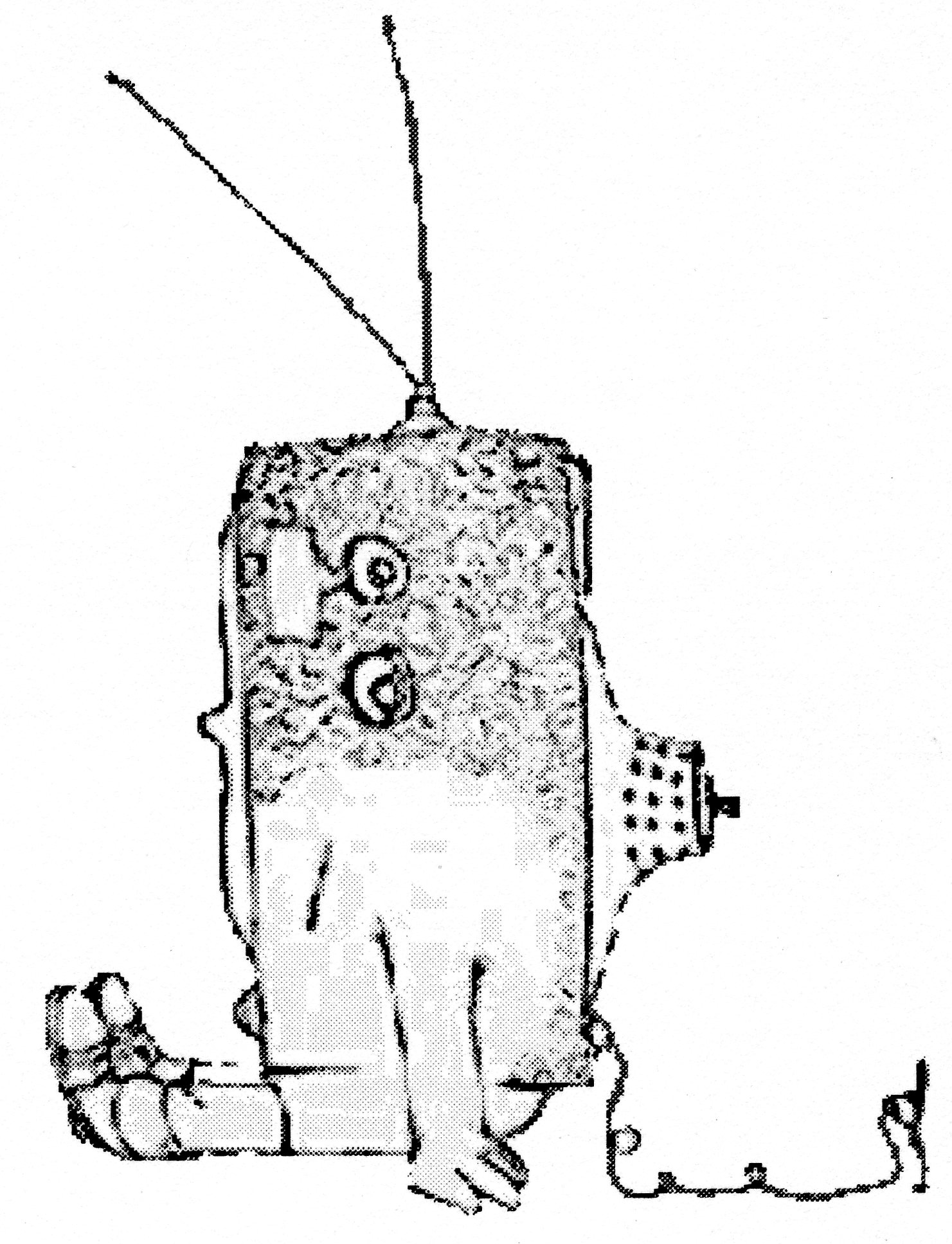
Once upon a time…

“I’ll tell you the story of Jimmy Jet –
And you know what I tell you is true.
He loved to watch his TV set
Almost as much as you.”*

*Text, from his children’s poem, “Jimmy Jet and His TV Set,”
and embedded sketches are by Shel Silverstein
(Where the Sidewalk Ends, 1974).

Tuesday, 6:47 PM, thirty-five years later…

“Hey.” Jimmy was beat, and was beginning to suspect the internship the summer before he graduated had be a hoax. Just two excruciatingly stressful days into the week, and he’d had it. Monday’s trip out of town on business hadn’t gone well, but he was back. Tired, disheveled, he plopped his computer case and small duffle bag onto hallway floor in front of his apartment, and started fumbling for his keys just as Melissa got off the elevator and turned toward her apartment, the one directly across the hall from his.

“Hey,” she responded, her raincoat folded over her left arm above the briefcase and handbag she was carrying, an overstuffed bag of groceries in the other.

“Here, let me help you with that.” He was crazy about Melissa, and pretty sure she liked him, but getting their deal underway was taking forever.

“Sure,” she smiled back at him, the sparkle in her eyes coming back on-line as she did. “Hold this while I get my key.” He did, and she opened the door to her place. Walking inside past the kitchen, with Jimmy right behind her, Melissa dumped her stuff on the table, large enough for just two chairs, and turned back to Jimmy to take the groceries.

“Spaghetti and turkey meatballs?” she asked him, hoping he’d come over.

Jimmy’s eyes looked away from hers, for just a second, at the French bread sticking out of the bag. “On-the-couch-picnic, in time for ‘Bones’ at 8? It’s an episode I haven’t seen.”

She almost forgot to say anything, but remembered just before it became weird. “Deal.”

Jimmy just stood there, reaching out for the door knob a full five feet behind him. Seeing his dilemma, Melissa put her hand against his chest and started walking, slowly pushing him back a couple of steps until he made contact.

“See you later,” he said, to which she nodded slowly back at him – no smile this time, but more of an expression resolute with anticipation that made him nervous.

Across the hall, he fumbled again for his keys, pushed his door open just crack, holding it open while he picked up the bags he’d left on the floor. Looking down, he saw the telltale whiskers of his cat who thought he was hiding from him, hoping he would open to door too wide and give him the shot he needed. “Hey, Dubie.” (It was short for “Dubious,” which described his gray and white cat perfectly.) Shuffling in, Jimmy did his best to prevent Dubie from escaping. “Miss me?”

“Meeeh,” which, according to Jimmy when Melissa asked him once, was Dubie-speak for, “You bet your bald ass I did!” Dubie was small, but then so was Jimmy’s apartment, the mirror image of Melissa’s.

Throwing both switches on the wall, the hall and kitchen lights went on. The flat screen in the living room was already on, having been set to bring up the NBC Nightly News at 6:30, and then switchover to the CBS Evening News “with Kay-tee Cur-ick” at 7. Jimmy loved saying her name with the announcer and, to disclose something he’d never admitted to anyone, thought she was hot. The TV in the corner of his bedroom did the same.

Pushing his door shut, he slid his computer case on the table by the kitchen, unzipped it and plugged in his laptop using the extra cord he kept at home, opened the lid, and repressed the on button, hardly missing a step on his way toward the balcony to see if Dubie was out of food and water.

The two TVs made it possible for him to move from room to room without having to wait for a commercial. Both sets were always on, even when he slept, a habit he’d picked up when he was a kid. At work, his computer was on-line all the time, his phone keeping him connected whenever he was out.

Changing out of his suit, Jimmy put on jeans and a t-shirt, and then had a thought that required a video call to Melissa.

“Hey.” He was in front of his webcam, she was in front of hers which was on a desk she had in her bedroom.

“Hey.”

“What are you doing?” as if he didn’t know.

“Changing into my jammies,” by which she meant the sweat pants and t-shirt she wore to bed. “But then that’s why you called,” she chided, moving her face right up to the screen, “isn’t it?”

“Actually, I called to ask if I should make some Sangria.”

“Oh, yeh? Well,” she thought for a moment, tying up her shoulder length hair into a haphazard bun, “sure. …No peeking,” she advised him, waving her finger back and forth in front of the camera as if she was scolding him.

“Of course not,” he agreed, covering his face with is hand, but spreading his fingers to let his right eye keep watching.

Turning around, but moving only slightly away from being directly in front of the camera – Melissa unbuttoned and took off the business blouse she’d worn to work that day, and the bra under it. “How was your trip?”

“Okay. ..I’ll tell you about it over dinner.” Talking now would only break his concentration. Melissa had told him that she’d read in one of her Anthropology textbooks that men were programmed to do only one thing at a time.

Her back facing the camera, she looked over her shoulder to see if he was watching, careful not to turn too far around as she did. He was still there alright, and quickly closed up his fingers while she stretched her t-shirt over her hair and pulled it down. “I’ve got to fix dinner. See you later,” and she left the room, knowing full well, and liking every second of it, that he was still standing there, staring at the screen.

She had just the one TV in her living room on which “Access Hollywood” was bringing her up to date on the world of entertainment. If she’d been paying attention, she’d have learned that Michael Jackson was still dead, but hadn’t been buried yet. Why this particular show? Because it was so much better than “Entertainment Tonight.” Just in case, she’d straighten up her room, but not so much to make it look as if no one really lived there. Her blouse and bra were left purposely tossed over the back of her chair. (She’d had to do it twice to get it to look just right.) And the sheet and light blanket she slept under were pulled up, but not all the way, the one pillow left propped up vertically, and pushed in lightly on top of the other as if she’d been sitting up in bed reading.

At 7:45 exactly, she was in the kitchen now, stirring a pot of store-bought tomato sauce and some turkey meatballs she’d made a few days before. A big bowl of salad, napkins, silverware and plates were on the table for them to pick up, buffet-style, when her phone on the counter made its familiar “boob boop” to indicate an incoming text. “Knock, knock,” the screen said.

Going to the door, she looked through her peep hole, knowing who it was of course, but wanting to make it official. And there was Jimmy, checking his office e-mail, his arm under Dubie who insisted on coming, a pitcher of red wine and fruit in his other hand.

8:57 PM. Dinner had been delicious. The entire bread was gone, together with an entire stick of cold, real butter, and they were down to sucking on the orange slices left soaking in the pitcher of Sangria. Dubie was somewhere, but neither of them cared. Melissa had given him a couple pieces of meatball which he ate off the coffee table, and were the highlight of his day. Odds were he was taking a nap.

It was a good episode of “Bones” through which they talked and laughed incessantly about every detail, speculating about the precise circumstances when Dr. Brennan and Agent Booth would finally make it official. It was their way, Jimmy’s and Melissa’s, of asking the same question about themselves.

As fate would have it, Melissa had sliced up the half a watermelon she’d bought over the weekend, just in case. It was Jimmy’s favorite dessert. The two of them sat there, some Lifetime movie starting up on the wide, HDTV a few feet across from them. Kitchen towels spread out on the coffee table, they leaned over, burying their faces into juicy, sweet slices, spitting their seeds, as best they could, into the glass bowl between them, only half of which made it. Three minutes later, they were making out like teenagers, which they barely weren’t, in a frenzied explosion of pent up passion, watermelon juice dribbling recklessly down the sides of their mouths and on their hands, grabbing at each other’s faces and t-shirts. …until the cable went out, and they stopped.

“What was that?” Jimmy asked, almost in whisper.

“Why are you whispering?”

“It’s so quiet.” Their mouths were less than an inch apart.

“So? “

Jimmy’s eyes began darting between Melissa’s and the TV, now nothing more than a black window on the wall. His blinking became erratic, his breathing labored.

“Jimmy?” And just as quickly, the cable came back. The glowing lights and sounds of dialog and soundtrack filling the darkened room.

Turning back toward her, she felt the strength returning to his hands, moving again under her t-shirt – and they got back to finishing what they had started. Right there on the couch, because there was no TV in the bedroom and Melissa wasn’t about to risk it.

-wf
Jimmy Jet 090509

That's Amanda on the right.

That's Melissa on the right.

What to read more? Just click here and pick a title you like.

Copyright as of the title date or earlier, by me.
(I write the WordFeeder blog.)  All rights reserved.
Email WordFeeder@verizon.net for additional information.

Saul’s Laws:* #9. Selfish Behavior

Saturday, September 5, 2009

*See the Preface to the “Saul’s Laws” page at the WordFeeder.

Saul was one of the good guys. Most people… No. Everyone, except me, who knew him assumed it was because he genuinely liked people, which was true. In fact, my father taught me to like and trust everyone I met – regardless of any superficial attributes, gender, race, style, whatever – until they gave me good reason not to. (It’s Saul’s Law #22: Relationships, which includes a corollary that, I discovered when I was in college, is really helpful for men wanting to meet women and visa versa.) Saul liked people alright, but what was interesting was his confessed reason behind everything he did which, he theorized, was the same for all of us.

“Everyone,” he told me, “does everything for selfish reasons.”

Whatever we do, it’s not because we want to improve the condition of the other person, it’s because helping the other person makes us feel better. Now, you say, “Of course.” “Being kind to others is its own reward,” so the adage goes. That’s all my father was trying to tell me. Well, you could say that, but you’d be wrong. If that was what he was talking about – that kindness is its own reward – that’s what he would have said. That would be Saul’s Law #9 on “Kindness,” but it isn’t.

My father’s point wasn’t about goodness as a goal in and of itself. He was talking about pure, raw self-indulgence, devoid of any virtue. Academically, I get it, but was he making a technical observation or was he trying to tell me that “the greater good” was a construct, a somewhat superficial belief, recently layered onto the history of our species, that glossed over the primitive motivation at the root of everything we do?

What difference does it make? The difference may have been that he didn’t trust “good.” Selfishness, greed, these were things he believed in, palpable emotions he considered fundamental to being human and, more broadly, to being a living thing of any kind – essential to our survival, and the reason for our tendency to socialize.

Far from being cruel, it was an innocent realization completely consistent with the intellectual honesty which was the subtext of every conversation we ever had.

Some of Saul’s laws were less straightforward, less obvious for their implications that others. Growing up – and, even as an adult, I’m still very much a work in progress – it’s been something I’ve had to deal with. (If my seventh grade teacher, Mrs. Campbell, is reading this, “How are you? And yes, I know a dangling preposition when I see one. Sometimes, I just prefer the way they sound.)

-wf


Site Meter

Saul’s Laws:* #8. Going it alone

Friday, September 4, 2009

*See the Preface to the “Saul’s Laws” page at the WordFeeder.

Saul’s Law on going it alone was an admonition not to. “Don’t try,” my father advised me, “to do important things by yourself.”

At the time, I thought he was talking about himself and my mother, that I shouldn’t be afraid to ask them if ever there was something I was having trouble figuring out on my own. But then he could have just said that, and didn’t. One thing about my father, he seldom blurted. He was smart, no question about it, although it wasn’t so much that he was mentally quick, as it was that he was always thinking and seldom encountered a situation or topic he wasn’t prepared to discuss. The intelligence he demonstrated so casually was hard earned. I think he meant exactly what he said.

It makes sense. There’s a lot we go through growing up and as adults, personally and professionally, that’s more than we can handle well by ourselves. On the other hand, and here’s the rub, my parents brought me up to be independent, to be able to take care of myself, to figure out things on my own and be proud of it. Independence was equated with strength. Dependence, with weakness.

“Life’s full of contradictions” could have been one of Saul’s Laws, but wasn’t. I guess it was one of those things he expected me to figure out for myself.

There was more to it that came later: “When you reach out for someone to help you, Son,” he called me “Son” and almost never by my given name, “and they do, be sure to help that person back if you ever get the chance, or someone else if you don’t.” The fact was, he taught me by his example over the years I lived at home, sometimes you’ll find yourself helping other people just for the heck of it. He thought of it as making a deposit, of banking the goodwill until he or someone else needed it someday.

No doubt about it, my father was one of the good guys, but not entirely for the usual reasons you might be assuming. You’ll understand when you learn Saul’s 9th Law of Business and Life: “Selfish Behavior,” next up.

-wf


Site Meter

Saul’s Laws:* #7. Timing

Thursday, September 3, 2009

*See the Preface to the “Saul’s Laws” page at the WordFeeder.

I have a little voice, sort of. It doesn’t talk to me. It types, in Courier, in the air in front of my face so I can read what it says, each letter materializing, one at a time to the distinctive sound of the keys hitting the roller on an old manual typewriter. And then it pauses and hits the period very deliberately, as if to say the word “Period” out loud.

When I was a senior in college, I came back from a date with a girl who lived on the women’s campus across town. While I was waiting for her in the lobby of her dorm that morning, I had run into another girl who I had dated for almost two years. I’d been crazy about her, but we had broken up and I hadn’t seen her for some time. We talked briefly when she came out to pick up her copy of the Saturday paper. It was nice, but then she left to go back to her room.

Later that evening in my apartment, I was standing in front of the mirror over my bathroom sink, not thinking about anything in particular, when my little voice typed out the following message, one keystroke at a time: “Y o u ’ r e g o i n g t o m a r r y E l l e n” … “.” And because my little voice has never been wrong, never, I walked over to the phone in my bedroom and called her. I told her, straight away, that I was coming over the following morning to ask her to marry me. She told me she had a date, and I told her to break it. She did. I asked her, and we were married that summer.

Marrying Ellen turns out to be the smartest thing I’ve ever done, so you can understand how much I respect my little voice.

Mostly, I rely upon my little voice to help me resolve less life shaping issues. I’ll be thinking about something all day and late into the evening until I pass out on our bed. The next morning, I get up, fill up the sink with hot water, lather up and, more often than not a short sentence materializes, one Courier letter at a time in front of me. “Pricing won’t be affected,” or “A wet bird never flies at night,” whatever, and that turns out to be the key to figuring out what I couldn’t the day before.

Sometimes my little voice is very, very specific. I’ll have written something the day before. Could be 10, 20 pages which I’ve proofread two, three times. It’s perfect, but it’s too late. No one will be there on the other end to read it so, what the heck, I put off sending it until the morning. I get up, sit on the edge of my bed for a moment and, “At the bottom of page 4, you left out the ‘to’.” Unbelievable, isn’t it. All night, while I was sleeping, my brain was thinking, going over the text of what I wrote, word by word, remembering it in a way I could never do consciously, and then waiting patiently for me to get up before bringing me up to date. More likely, it was something I had noticed, but never thought about fixing. Either way, very impressive.

The other day I was writing a piece (“Congressional Dreaming: Doing Away With The Senate And Other Radical Changes We Need To Make Congress Work”) in which I advocated, among other things, reducing the House to only 100 Members so they can finally get something done. Fortunately, I slept on the idea, with the TV still on in the corner of our room, until I was awaken in the middle of the night by the unbelievably annoying “ehhh, ehhhh” of the emergency broadcast claxon. (If it were a nuclear attack, I’d probably assume it was a test and sleep through it.) Reaching over Ellen for the remote control on her nightstand, I froze for a moment while my little voice typed out suggestion, “1,000,000 people per Representative.” It was a much better idea which I wrote it down on the pad I keep beside my bed so I wouldn’t forget.

Time and time again, I’ve saved my tush from making costly or embarrassing errors just by giving myself the night to let my brain and its little voice do what they do best – proof positive of Saul’s Law #7 which says,

If it doesn’t make any difference whether or not something you’ve written, or need to tell someone, goes out at the end of the day, or the beginning of the next, always wait until the morning. Something may occur to you in the meantime.

By the way, I’m just finishing this up at 11:04 PM with plenty of energy left to watch at least the first half hour of Conan while I do the dishes… (You know who is already asleep on the couch.) …but no way am I posting it tonight.

“G o o d,” wait for it, “.” Hey? Who typed that?

-wf


Site Meter

Congressional Dreaming: Doing Away With The Senate And Other Radical Changes We Need To Make Congress Work

Tuesday, September 1, 2009

Let me say right from the outset, this is one of those postings that is going to make my children cringe. Fortunately, it’s a free country and no one important really knows they’re related to me. Fearlessly, I’m saying for the record what I concluded years ago, that the Congress has too many members, too constantly engaged in the process of getting elected, to be an efficient or effective decision-making body.

I recommend making three changes, each of which requires amending our Constitution. Without question, I cannot overstate my reluctance to tamper with this historic document. Unfortunately, as the decades long historic and current debates over healthcare reform legislation affirm, it has gotten to the point where any concerns I may have about changing the Constitution are outweighed by the adverse social and fiscal consequences of Congressional inaction and ineptitude when they finally do get around to doing something.

The American people don’t trust or respect their Congress, and for good reason. That’s got to change. No democracy can endure if the people hold their legislature in such low regard.

First, I want to do away with the Senate. (Okay, everybody, breathe.) I understand that our founding fathers needed to acknowledge states rights as part of some process of compromise. More than two centuries later, it’s time we recognize that states have no inherent rights to representation. Lincoln said that we are a nation “of the people, by the people, for the people.” States were nowhere mentioned. The enclosed table shows 2008 state populations estimated by the Census Bureau. It is ludicrous that Wyoming, with only 532,668 people should have representation in the Senate equivalent to California’s 36,756,666 citizens – unless you believe in states’ rights, which I don’t. I believe that a representative government should be based on the singular principle of one person, one vote, period.

We now have a single house Congress.

Second, I’m recommending that we reduce the number of Representatives from the current 435 to 304 – even though it will mean that some states will have to share Representatives. I don’t care, because I don’t believe that states have any right to be making laws. That 532,668 people have a whole state to themselves is irrelevant. The residents of Wyoming, our least populous state – including the District of Columbia – are citizens just like the rest of us, deserving of no more or less representation in Congress.

The average number of people represented by the current 435 Members of the House is 698,988 based on Census Bureau estimates of 2008 population. Based on those same estimates, our current population is just over 304 million. I’m recommending that we increase the number of people represented by a Member of the House to one million. 304 is a more manageable number which is still plenty large enough to assure independence and diversity.

Third, I recommend changing the term of our Representatives from two to six years, one third of them to be elected every two years – so that they’re not as distracted by the need to be constantly running for office.

We now have one President, nine Justices of the Supreme Court and just one house of 304 Representatives. Maybe we can get some work done.

If you’ll excuse me, I’ve got to call my children before they change cell phone numbers or enter the witness protection program. With luck, nobody will read this and everything will be fine.

-wf


Site Meter

Saul’s Laws:* #6. Doubt

Tuesday, September 1, 2009

*See the Preface to the “Saul’s Laws” page at the WordFeeder.

Ever said, written or done something, something important that you weren’t entirely sure about, and then regretted it?

The uncertainty you were feeling was your brain’s way of telling you that it didn’t had enough time or information to evaluate the consequences of what you were about to do. Or maybe it was that emotions were attempting a coup, taking charge of your decision process, rather than just being content to be part of it. Who knows?

The only thing we can say for sure is that, for some reason, you weren’t comfortable. There was a palpable, at least momentary uneasiness that you had to ignore or override. Could be fear you were experiencing. More often, it was the apprehension, the mixed signals that come from inexperience or from the conflict between what you’ve learned from experience or have been taught and the circumstances of the moment.

It’s for times like these that we have this particular Saul’s Law: “If you have any real doubt about doing something, something that could be important, don’t do it. Wait until it feels right.” Still want to do or say it? Maybe you can change the rules or context, even a single word can make a difference, until the instinctive uneasiness you’re feeling has resolved itself.

Too conservative for you? What? You we’re expecting something more like, “When in doubt, go for it.”? My father was a Republican.

The more astute among you may be sensing a contradiction between this law and #5: “Never let being afraid stop you from doing the right thing.” For the record, in the latter case, Saul was talking about doing things having moral or ethical content, not bungee jumping.

Also for the record, Saul’s Laws are full of contradictions. When I was older, and would confront him on just this point, he would argue that it was on purpose, but I would see the corners of his mouth turning up which was a sure sign he was just pretending to have thought about it. In fact, if there was one thing he was trying to accomplish, it was to get me to think, about what he had to say and everything else. At that, he pretty much succeeded.

-wf


Site Meter