Category Archives: Life

Saul’s Laws:* #5. Integrity

Sunday, August 30, 2009
*See the Preface to the “Saul’s Laws” page at the WordFeeder.

“Never let being afraid stop you from doing the right thing.”

This was another one of Saul’s original laws. His words exactly. Told to a little kid, they left an indelible impression.

I’ve always wondered what was going on in his life at the time that prompted this unsolicited advice offered to his six year old son, working with his father in their basement shop one Saturday morning.

-wf


Site Meter

Corporate Culture

Short Fiction for Guests of the WordFeeder
Sunday, August 30, 2009

It was a case of “unauthorized schtupping” which was what it said, in more professional terms, on the papers when Jeremy’s wife of just three years sued him for divorce. As for the more common description, those were the words of the division’s President, Howie Rackman, who thought he was funny, but wasn’t. Only three years from retirement, Rackman’s sensitivities and terminology were those of a very different time.

“Schtupping,” from the Yiddish “schtupn” meaning to push (in) or press. Rackman, who wasn’t Jewish, but who had secretly always wanted to be, thought it was funny to mock Jeremy’s ethnicity, laughing out loud when he did, shaking his head from side to side as he marveled at the wit only he appreciated. (He also wanted to be Italian, but only if he could have the accent he was certain women found irresistible.) At least he was an equal opportunity jerk, having no qualms about offending anyone regardless of their origins or type – and women, women in particular whom he considered inferior, little more than interesting toys for the men in their lives and his company. “Somebody has to do all this clerical shit,” he often remarked around the conference table after one of the young female assistants who worked with senior management would leave to get coffee, make copies or do “God know what.” It was no accident that they were all young and attractive. That was, after all, the primary reason they were hired.

Jeremy Levitz, the senior Assistant Manager in the division, just three years out of Wharton with his MBA, never fit in and couldn’t get the promotions his work deserved. The market was soft, so he couldn’t leave. What he wanted was to manage one of the new offices they were opening – get the hell out of corporate, spend the next three years building that office his way and then move back to headquarters after Rackman retired.

Jeremy was good enough for management to take credit for his work, but not good enough to be one of them. Their nominal excuse was his lack of experience. The real reason was that they didn’t want the competition and couldn’t overwork and otherwise exploit one of their own, and that meant denying Jeremy membership in their exclusive club of over-paid, under-performing senior division executives.

And then there was Ruth. 30. Unquestionably the hottest “shiksa” in the office. (Rackman liked to use these terms like they were his own. “Ever wonder to yourself,” Jeremy once asked his wife, “where politically incorrect expressions go to die? Now you know.”) As close to being “one of the boys” as a woman could be, she’d earned every dollar she’d made putting up with their crap, never letting them get to her, keeping her distance – never once having had so much as dinner with one of them. Rackman and his posse didn’t respect her, not really, so much as they feared having to deal with her. She made them nervous for the wrong and inappropriate reasons.

She and Jeremy were the ones who made the division happen. Everyone in their division knew it. More to the point, so did corporate management two floors up. They tolerated Rackman as a legacy, for his work with the founder building the company decades ago, but would clean house as soon he left. In the meantime, although neither Ruth nor Jeremy knew it, the two of them were bullet proof. Picking on them, dumping on them was as far as corporate would allow Rackman to go, although being fired might have been a godsend. For the two of them, the next three years under his supervision would seem like ten.

“I need the re-analysis of our southeastern region on my desk Monday morning.” Rackman’s tone was matter-of-fact, barely breaking his stride on his way past Jeremy’s office. Leaving early for the weekend, he wouldn’t be missed. “I’ll need 10 binders, and write me a presentation, big type, you know how I like it, including notes indicating when I point to what. That always impresses them. …Use Ruth for whatever you need,” he added, raising his eyebrows as if those instructions had sexual implications. (Ruth had wondered out loud to Jeremy once, after a particularly slimy exchange with Rackman, whether or not he had a clue how truly unattractive he was? It was a rhetorical observation.) “See you,” and he was off without bothering to ask if there might be any questions, utter a “Thanks” or wait for Jeremy to nod his acceptance. Just a “Whoa. Hold the elevator,” in which everyone was begging the doors to shut more quickly, and he was gone.

“Asshole,” Jeremy mumbled under his breath, rolling his chair to look out at the cityscape and ponder his frustration. He’d been hoping to spend some quality time with Evelyn this weekend, but clearly that wasn’t going to happen. He’d be lucky to get out of his office. Maybe, he thought to himself, eyeing a young women moving wistfully through her office in the building across the street, maybe Evelyn would bring over some carryout that evening and they could get to know the leather on his couch together. Just then, the woman across the street stopped, and turned to face him. Smiling, she waved and let him lip read the word, “Hey.” He smiled and waived back at her the way they often did, both of them slightly embarrassed by their long-distance relationship as she walked away and out of her office. Seeing her like that, the girl with short blond hair he’d never met, was often the highlight of his day.

Turning back to his desk, Jeremy reached for his phone, thinking he’d better call Evelyn, just before it “buzzzz”d at him. Pressing the intercom button, he said the usual, “This is Jeremy. What do you need?”

“Hey. It’s Irene,” the receptionist on that floor. “There’s a messenger here with some papers he says he has to give to you, personally. Can you come out, or should I walk him back.”

“Thanks. Here I come.”

It was to the right, just down the open hallway formed by the offices along the perimeter and waist-height carrels in the middle of the floor. Turning the corner past the upholstered furniture in the small lobby, instead of the usual bicycle messenger smelling like he had just been on fire, there was a young man, in his early twenties wearing a suit. Hearing someone coming, he was quick to break off his vain attempt to score points with Irene. It wasn’t that she was so pretty, as it was the effect of her strawberry blonde hair that seemed to have a life of its own.

“Mr. Stein? Jeremy Stein?”

“Yes?”

“This is for you,” he said, taking a 9 x 12 white envelope out of the zippered portfolio he’d been holding against his chest. “And, if you would,” he paused for a moment, looking down to fill in the time on his clipboard form, “Please sign here, in the blank next to your name.” Jeremy scribbled his usual “JStein,” no period after the “J,” looking apprehensively at the return address for one of their city’s boutique law firms, well known for representing women in divorce, workplace and other litigation. “Thank you, Mr. Stein.”

“Yeh,” Jeremy mumbled, putting off opening the envelope until he was back in his office, knowing that Irene would be staring after him wanting to ask what was going on, but being nice enough to understand that it was none of her business.

It was a Friday afternoon, after a long week during which Jeremy had been noticeably upset by some rough calls with his wife, Evelyn, his end of the arguments having been overheard through his office walls even though he’d been trying to keep it down. Apparently she’d had it with the endless late night sessions at the office working with Ruth, often going until 1 or 2 AM, not to mention the weekends.

He was surprised, having been more or less oblivious to his marriage during the past year, but then he wasn’t. They were divorce papers alright, accusing him of adultery, naming Ruth Smythe the subject of his indiscretions. Ruth would deny the accusations vehemently, but no one would believe her – not even her friends among the other women in the office who had seen the two of them working together, heard the occasional laughter, seen them touch or brush up against each other when no one was supposed to be looking. It might have appeared innocent enough at the time, but now it made perfectly good sense.

By Monday afternoon, everyone knew. At first, and to everyone’s surprise, management wasn’t annoyed at their intra-office affair. Far from it, they were impressed that Jeremy had nailed, repeatedly, the hottest girl in the office – and at the office, no less. For Rackman and his yes-men, it was enough to make them tear-up. “Way to go, Jeremy. Good work.” They didn’t say it out loud, but you could read it on their faces and in the way they had started treating Jeremy. Make him one the boys, his sexual conquests rub off on them. The fact was, they still didn’t like him. All this new found comradery was more about minimizing Ruth. Respecting Jeremy had nothing to do with it.

And so they were feeling pretty good about themselves, living vicariously through Jeremy, until Ruth showed up with her attorney – a striking, if severe looking woman – who sat down in Rackman’s office, door shut, and explained, in no uncertain terms, how her client was going to sue his company’s ass off for sexual harassment and discrimination. Proof? What proof did she have? Sexual harassment and discrimination are always so hard to prove.

Ruth’s attorney wasn’t about to concede any ground. “Mr. Rackman, you don’t honestly think a jury is going believe anything you have to say? You don’t have a single woman in any management position, not here or in any of your offices. With a couple of exceptions in the mail room, the entire clerical staff is female, young and attractive. No one over 40, no one overweight – and every one of them underpaid according to agency and government industry surveys.”

“This is extortion. This sex stuff was between Levitz and your client. Strictly personal business. What’s the company got to do with it?”

“You’re not really paying attention, are you Mr. Rackman? In the past 4 years, different men on your management team – including you – have asked my client out to dinner – a dinner “date” mind you, with no business purpose – on seven documented occasions, all of which invitations she declined. During the same period, she’s received nothing more than routine, minimal increases in salary, despite very substantial expansion of her responsibilities and three “Superior Performance Memoranda” for work which came to the attention of senior corporate management…”

You’d think Rackman wouldn’t have talked to them without his own counsel in the room, but that would have included corporate in the conversation. Turns out a significant portion of his retirement income is subject to Board approval. The kind of mess Ruth’s attorney was threatening wouldn’t be good for him.

“…And now, when she’s required to work under an Assistant Manager with less experience than she has, but who she has to please and, by inference, please you to keep her job, this happens!” The attorney held up her copy of the divorce papers. “’Use Ruth for whatever you want’? Are you kidding? That’s the way you talk about a female professional, raised eyebrows and a condescending smirk on your face, in earshot of the staff she supervises? Do you really want to take us on?”

“What do want?”

“Surprisingly little. You’ve got two new regional offices opening up in Savannah and Phoenix for which you’re advertising for managers. Levitz gets Savannah. My client wants Phoenix. Three year, no cut contracts, with standard executive level benefits, increases and bonuses. Promotions effective the first of next month.”

Rackman was quiet, doing his best to avoid the stare of the women sitting on the other side of his desk. And then he looked up, leaning back in his chair. “What the fuck. Your client can have Phoenix. Too damn hot, if you ask me, but why do you care what happens to Levitz?”

“My client feels that he’s basically an okay guy, who shouldn’t lose his job over something that’s really your fault. His marriage is over. It’ll be enough to have him reassigned to a startup office. You’ll just have to learn to live without the two of them.”

No reaction. (Unbelievably, Rackman was too busy staring at the attorney’s legs, her skirt a full three inches above her knee.)

“Besides, what do you care? Just agree and all this goes away.”

“You’re right,” he said, getting back to the issue at hand, “I don’t care. Consider it done.”

“We’ll expect both contracts in my inbox by COB Friday. My e-mail address is on my card. “

His pursed lips and inability to look them in the face were the only response they were going to get. Picking up the card the lawyer had given him when they first came into his office, he tapped the edge of it on his desk and waited for the sound of them pushing back their chairs to get up and leave.

Two weeks later…

“Hey, Ruth!” Jeremy realized it was her before he answered, calling from her new Phoenix area code cell phone number. “Are you having as much fun as I am?”

“More! How’s Evelyn? Are you settled in yet?”

“Yeah, we’re fine. What’s not to like. The city’s great. We virtually live on the ocean, and her parents and sister are less than an hour away.”

“Not to mention the money!!” He could have almost heard her laughing without the cell phones. “Absolutely the best idea Evelyn ever had!”

“Hi, honey. It’s Ruth.” Evelyn, holding the carryout they ordered, had just poked her head, to be funny, around the corner of the open door to his office. Jeremy would be working late tonight and they thought they’d unwrap his new chairs and leather couch together.”

“Here,” she reached for his phone, “give it to me.” “Hey, Ruthie! Thanks for your help with all this.”

“Are you kidding? I just wish I’d thought of it – or had a cousin who’s a women’s rights attorney.”

“Consider it a team effort. Rackman’s been screwing you and Jeremy all this time. The least we could do is return the favor.”

-wf

What to read more? Just click here and pick a title you like.

Copyright as of the title date or earlier, by me.
(I write the WordFeeder blog.)  All rights reserved.
Email WordFeeder@verizon.net for additional information.

Saul’s Laws:* #4. Binary Decision Making

Saturday, August 29, 2009
*See the Preface to the “Saul’s Laws” page at the WordFeeder.

Some of Saul’s Laws are technical, like this one.

We are a people with way too many choices. Making the routine decisions of our lives has become too time-consuming and the source of petty, but sometimes major stress we really don’t need. Whether you’re trying to pick out a color to repaint your bedroom, choose the perfect new cell phone or figure out which one of the girls in your dorm you should ask out first, we’ve all had the problem of picking “the one” out of many.

Whenever possible, reduce all decisions to choices between just two alternatives. This is Saul’s Law of Binary Decision Making. It’s a simple trick. Try it. It works. What the law forces you to do is organize your thinking. Rather than seeing all the options in front of you as a single blob that’s starting to make your head hurt, Binary Decision Making steps you through the process of quickly reducing your options to the point of choosing between or among the last two or three.

Whenever you need to choose from among a number of things, start by discarding the one you like least, or that you know you like less than at least one of the others, and then work your way up to the two or three you like most, eliminating the least attractive alternatives as you go

If you’re facing three alternatives, and are having trouble deciding among them, pair them off. Look for a pair with one alternative you prefer over the other and eliminate that one, the one you like less. Then work on the two that are left.

The first couple of times you do this, it may seem time consuming. Be patient. It’s an illusion that will go away with experience. Not only will complicated, multiple choice decisions be less stressful, the results will more accurately represent your preferences because you’re not rushing your decision or avoiding having to think it through by just picking something to get it over with.

Go ahead. Two at a time. You’ll thank me in the morning.

-wf


Site Meter

Saul’s First Three Laws of Business and Life*

Friday, August 28, 2009
*See the Preface to the “Saul’s Laws” page at the WordFeeder.

Humor. Integrity. Character. These were things my father (and mother) taught me by example. The subject of these posts are laws about which he was very specific. Some of them, like these first, seemed to be about business, but I suspected then even as a little kid, and am sure now, were meant to be about life in general.

Newton had his three laws of motion. Well, these were Saul’s first three laws of business:

1. Compromise. Everything is negotiable, although some things are more negotiable than others.

2. Focus. Never sell more than one thing at a time.

3. Truth. Never sell anything you don’t believe in, and it wasn’t just business he was talking about. (He also taught me how to draw a straight line along the edge of a board without using a ruler or square.)

My father, by the way, wasn’t a career salesman. He was, nonetheless, the most effective salesman I’ve ever met – second only to me. But then I don’t count, given that everything I know about sales, I learned from him. No, I’m not a professional salesman either. It’s just that we’re all selling, all the time, and I suspect that’s why these were the first laws he taught me.

-wf


Site Meter

The Illusion of Prejudice: The Minority Rules

Wednesday, July 29, 2009

Sad, but true. In the electronic age of omnipresent wall-to-wall news coverage, the opinions of the very few are quickly blown way out of proportion.

As everyone knows by now, there has been a confrontation between a white policeman and a black resident who a passerby thought, innocently enough, might be burglarizing what turned out to be his own home. Whether there was race involved in what occurred is problematic, and my personal opinion on the subject, irrelevant.

In fact, it’s not the event itself, but what happened next that is, I think, most significant. As if the event had not been newsworthy enough in and of itself, the President of the United States, admittedly without a full understanding of what transpired that day in Cambridge, chose to comment, to second guess the local police and make the assumption that racial profiling had been involved. As to latter, if that hadn’t been his assumption, why was he commenting – and, of course, we’ve since learned that that was exactly what the President was talking about when he accused the Cambridge police of having behaved stupidly.

The next thing you know, it’s all over the media, day in and day out. The opinions of a relatively few number of Americans, a miniscule proportion of our total population – virtually none of which were there or have complete knowledge of the event – become the subject of the news. Even the few polls that have been taken are based on very small samples and questions which force the respondent to form an opinion, however well poorly developed or uninformed. “My gosh,” the rest of us say, “I had no idea…” and you can fill in the rest.

The result can be that the existence of a phenomenon, in this case, adverse racial profiling, is blown way out of proportion to the point of actually convincing many people that that’s what actually happened, and that the problem is everywhere, that black Americans are being discriminated against left and right, everywhere, all the time. I certainly hope that’s not the case, but the news that is today’s excuse for legitimate journalism is no proof of anything but that your set or personal computer is on.

The problem is not just the ever-present, compelling nature of today’s electronic media technology. More to my point, it’s the people who report the news – cable news being the worst example – who spend much more time telling us what a few people think, and way too little about precisely what actually happened. As to the larger, national issue, the American people are not served well by anecdotal statements by people, whatever their color. What are the facts of the problem? What do legitimate studies of the subject of continuing racial prejudice and profiling tell us?

President Obama, in an attempt to spin positive his inappropriate and frankly prejudicial* comments on the event in Cambridge, says this should be a learning experience for all of us – and invites the two principals over for a beer. (Unbelievable.) Far from being educational, the President and the media have created a mess that does the serious issue of racial profiling a disservice, and is distracting us from more pressing issues at hand.

*Suggested reading… “President Obama: The Presumption of Prejudice“, posted July 23, 2009 on the WordFeeder.

-wf


Site Meter

The Fat Tax and Fitness Incentive Program

Tuesday, July 28, 2009

Without question, the Obama plan for improving our national health needs all the help it can get. Candidate Obama campaigned relentlessly on a platform of change, and yet the best he can do is produce the mess he calls “healthcare reform.” Coming on the heels of his stimulus program, it’s no surprise.

Here’s a relatively inexpensive idea that uses nothing more than basic economics and marketing to accomplish what 1,000+ pages of legislation won’t. As bizarre as it may seem at first blush, the simplicity and power of what I’m about to suggest make it worth taking seriously. More often than not, it’s the most straightforward approach that works best.

By and large, we are a nation drowning in our own body fat. We’re addicted to the crap we eat, and can’t seem to help ourselves. The agro-manufacturers and food service retailers feed that addiction because that’s what sells.

In the midst of all this tedious debate about overly complicated healthcare legislation that you just know isn’t going to work even when they finally do pass it, clearer thinkers have pointed out that, if we just weren’t so overweight, we wouldn’t need as much healthcare in the first place.

Okay, I have a suggestion. You know those “weigh stations” you see on the highway that trucks use to confirm the load they’re carrying so they know what to charge and what taxes to pay? Well, we need something like that to provide people with an emotional and financial incentive to hit their healthy target weights and BMI (body mass indexes), and then maintain those levels.

I’m a big believer in the power of pricing to manipulate people’s behavior. To that end, we could tax foods based on their sugar, fat and other adverse content, but that’s administratively messy and doesn’t address the full scope of the problem. No. To be effective, we need to take a more direct approach, one which not only encourages healthier eating, but also fitness, while exciting our collective psyche to resolve the problem of obesity like no other program you’ll ever get out of Washington.

Here’s what I recommend…

(1) Have the Surgeon General provide everyone his or her target weight and BMI.

(2) Require every citizen to make, let’s say, quarterly visits to authorized “weigh stations” – doctors’ offices, clinics and other convenient, responsibly staffed locations – to obtain a chit confirming weight and body mass. These weight checks will be a free service for which medical service providers will be reimbursed by the government.

(3) Send people money – real money like government rebate checks – if they’re improving or maintaining their weight and body mass at their target levels.

(4) And how do we pay for this program? Are you kidding, that’s the genius of it. We pay the people who are losing or maintaining their weight with the Fat Taxes we’re going to levy on people are aren’t.

That’s right. I want to take a Fat Tax right out of their checks: Federal, state and local income taxes, Social Security, and Fat. Why not? Com’on, why not? If you’re going to eat recklessly and be a burden on the rest of us, well then, you need to make up for it by contributing your fair share – by carrying your own weight, as it were. It’s the least you can do. If, on the other hand, you’re doing what you can to lose and control your weight, you deserve to be reimbursed for the savings we’re all going to enjoy from lower healthcare costs. (Fitness incentives could be paid the same way, as a negative Fat Tax that has the effect of reducing total deductions from your pay check.)

How ‘bout them apples? (Notice I said “apples,” not “Cheetos,” or pork rinds.)

Is it the perfect program? Does it have flaws? Are there details we need to work out? Sure, but it’s a creative start in stark contrast to the unimaginative drivel our new President and Congress are producing. How about if, while I’m chewing on this stick of low fat, low cal kosher bacon-flavored turkey jerky, dreaming about my Fat Rebate Check, you think about what I’ve said and get back to me with your comments and suggestions? Think of this as the beginning of the first wiki-government program, by the people, for the people, and what better place to start than with our health. I seriously doubt we can do any worse than the Administration and Congress.

I say we take charge of our national health and kick some serious ass before that ass gets any larger.

-wf


Site Meter

Bob*

*This is a story about Bob, a “Type A” person who is married to his work.

Short Fiction for Guests of the Wordfeeder
Monday, July 27, 2009

Two male coworkers at the high tech company where they were mid-level executives were on their way down the hallway – the one giving the other, newly hired, a tour of their offices, on their way to the nicest of them, the one in the corner just ahead. “Corner” wasn’t exactly true, given that the perimeter of the building was irregular and, at that point, traced a ark, like the cross section of a wing, more dramatically curved on one side (the leading edge), smoother on the other. It was empty, this nicest of all the offices, the large table that served as a desk perfectly clear as if no one had been using it.

“So who are they saving this for?” the new one asked his mentor, both of them standing just outside the one of the double doors that was open. Somehow going in, even though it was vacant, seemed out of the question. It was the only office on the floor that didn’t have glass interior walls and doors – where, if the doors were shut, you couldn’t tell from the outside what was happening on the inside.

“Don’t get your hopes up. It’s already taken. Belongs to ‘Bob,’ the creative genius behind all this. Ever have a conversation with one the new generation corporate voice mail systems, the one’s that make you think you’re talking to a real person?”

“Sure.”

“Well, thank you very much, all the way to the bank.”

“So what’s he like?” They were talking to each other, but with their eyes focused on the interior of the office, at its perfectly finished uneven plank floors, and at the almost too many plants and flowers, some inside, some on the deep balcony all around. The entire exterior wall was made of seamless glass panels that folded upon each other, to the left and right, to open the entire office to the outdoors. A gentle breeze just made to the faces of the two of them, feeding the wonder of what it would be like to work there.

This entire floor was the senior executive suite, the top floor of their terraced dome shaped building that all but disappeared in the topography of the countryside. From the air, it looked like a lush mound of dark and light green foliage, with random mixings of red, white, yellow and violet flowers that covered the edges of the various irregularly shaped balconies that were everywhere. A large center atrium in the middle of the floor, going all the way down to the basement of the building, added to a sense of openness, of almost being outdoors. Stairs lead up to the rooftop garden where they held indoor and outdoor meetings, and sometimes parties, when it was nice out and they could retract the roof. It cost a fortune to build, but was well worth it for the effect it had upon its residents during the long hours they often spent there.

“I have no idea. Never met him, and I’ve been here three years. He works from home. Communicates over the telephone or on-line with e-mail and video calls.”

“Excuse me.” Sounding highly rushed, a young woman pushed past them holding two bunches of fresh flowers which they grow in the complex.

“Jackie!” Another young woman was running down the wide hallway behind her, pushing one of the carts they give you in the company cafeteria when you’re picking up food and drinks for a meeting. The two men, not wanting to get in their way, split up and stepped back while Jackie opened the other door to Bob’s office to make room for the cart. They were there, the two men, but neither of the women noticed them. “I’ve got everything but the frozen pineapple yogurt he likes!”

“Com’on. It’ll be okay. He’s going straight to the Board meeting. We’ve got time.”

“What about the yogurt?” She was more than a bit frantic.

“First of all, it’s sorbet, pineapple sorbet. He has it flown in from New York. Call down and tell the Cafeteria Manager on duty that it’s in the Executive Pantry.”

“Hi, guys.” It was Bob who, in all their excitement, they hadn’t seen coming, standing between the two men, just outside his own office. A worn, soft leather briefcase in one hand, the other combed back the hair that flopped over his forehead to no avail.

He was tall, and thin too, taller than any of them had expected, his boyish good looks and warm smile leaving the two young women speechless, and the two junior executives invisible. Bob was the poster boy for purposely unassuming technology sector billionaires at their creative peak: Jeans and a plain gray t-shirt, untucked of course, with a blue and green plaid flannel shirt on top of it, open in the front, sleeves rolled up in a hurry. Well worn Nikes. Hair unkempt, but it could have been cut to look that way. If it was, the cut was so good, no one could tell. Money will do that for you. One of the girls would speculate later that he only shaved every third day, this being the second judging from the stubble, as if she had any idea what she was talking about.

“I just need to use my computer to print something out before the meeting.” His tone was apologetic, almost as if he were asking their permission.

No introductions. No shaking of hands. Nothing more than a polite “Hey” to the two men as he walked into his office and they headed back down the hallway, one whispering to the other, “So that’s what a billionaire genius looks like.” They, as if anyone cared, were wearing “business casual” to be safe and to remind the t-shirted staff under them that they were in charge. Bob, on the other hand, had nothing to prove and couldn’t have cared less that they were clearly in violation of the de factor company dress code.

“Do you want us to leave, …Bob,” she added reluctantly, having been told to call him by his first name.

“No, no. Sorry to get in your way. …Wait,” he said to the one of them that was stocking his refrigerator, “Let me have one those boxes of cran-grape juice.” Holding up his open palm of his hand, he clearly wanted her to toss it to where he was standing, maybe 15 feet from her, behind his desk, his other hand busy on the synapse pad of his notebook computer.

Glancing over at her friend for reassurance, she stood up from where she had been kneeling and prepared herself for the toss of her corporate life. Over-handed? No, too short a distance. She’d go for a soft, underhanded lob – but it had to be right on target to make a favorable impression. “Casual precision” was the effect she was after.

“Hey,” he said looking up, knowing that he tended, for reasons he really didn’t get, to sometimes make people who worked for him nervous. “The worse thing that’ll happen is that I’ll miss, and you’ll be fired.” Noticing that his attempt to set her at ease seemed to have backfired, he decided to encourage her. (By this time, she could have walked over and handed it to him, but it was too late now.) “Com’on,” he smiled at her, mostly with his eyes. “Go for it.” And she smiled back and did. He caught it, unwrapped the straw, pushed it through and took a long zip on the way past the printer next to his desk and out the door. “See you later.” Not likely, but it was the nice thing to say.

“Right,” the girl at the refrigerator responded, the other one just managing to nod. But then when he was gone… “God damn, I had no idea he’d be so cute in person. He’s not gay, is he? I didn’t get any gay vibes.”

“Gay, no. Married yes.”

“I know, I caught the ring, but a girl can dream. Maybe his marriage will tank and he’ll remember the moment we shared over a box of cran-grape Juicy Juice.”

“Savor it. The Board only meets once a quarter, and the word is he doesn’t like hanging around people, particularly when he’s crashing on something. Myra, the girl in bookkeeping who processes his receipts, says the only person he’s really comfortable around is his wife. They’re newlyweds. Myra says they eloped.”

The other one, leaning on the door watching Bob going up the stairs to his meeting, wondered out loud. “I’m surprised. He doesn’t seem the least bit weird,” she thought to herself out loud, almost sighing.

“Hey. Back to earth. We’re still here when he gets back, and we’ll both be looking for work.”

“I don’t think so. He seemed way too nice.”

“He is nice. It’s our ass-kissing supervisor I’m worried about.”

As it turned out, the meeting took longer than expected, a good deal of it spent convincing the Board that the time and money he was spending, had been spending for more than year now on his current project would be worth every dollar of it. Refusing to give them details or more than the most general status report didn’t help. They’d believed in him before and he made them rich, but they wanted him paying attention to the development of their existing product lines, securing their market share before he ran off in a new direction. Whatever it was, it had better be worth the wait.

When it was over, Bob stopped by his office for a hour, enough time to meet with a couple of administrative department heads. Two perfect deviled eggs and some pineapple sorbet later, he was out of there. Down the highway to the high-rise luxury condo where he and his wife lived in relative seclusion, seldom leaving their apartment.

“Hey, Howard,” he smiled at the well-dressed receptionist at the front desk, stopping by the mailroom on his way to the elevator from the garage door.

“Good evening, Bob.” Even off campus, he insisted everyone call him by his first name. Building management had actually issued a bulletin to that effect to all building staff. “My regards to… to Sarah?” Too late. He’d already made it sound like a question. That was awkward. Maybe he should have used her last name, “My regards to Mrs. …”? The fact is, he was just being polite, having never met Bob’s wife in the several months he’d been working there, except to talk to her on the building intercom and receive a package for her now and then that he would take upstairs and leave outside their door. Bob and Sarah were known to be big tippers, and he was right to expect a substantial holiday bonus if only he could manage not to annoy them.

“She’s fine. Thanks for asking,” he said, clearly too busy sorting through his mail to be paying attention. “We’ll be ordering some delivery, probably Italian. Just let him bring up,” Bob told him just as the elevator doors were closing, flipping the pages of one of the technical journals he was holding.

“Sure thing,” the attendant responded, smirking and rolling his eyes in an expression of “What the hell,” knowing it was too late for Bob to hear him.

Coming off the elevator, Bob’s condo was one of only four on his floor. It was large, with the kind of high ceilings and glass only rich people can afford, but surprisingly modest for a person of his wealth. The door to his place was the only one with a 10 key security panel. It looked normal enough, until you realized that each button on the key pad was fingerprint sensitive – different finger prints for different buttons depending upon how he programmed it – which isn’t something you or an intruder would have been able to tell. It was one of Bob’s designs for their new security products division.

“Hi, honey. Sorry I’m late,” he said, dropping his keys on the table next to their front door.

“Hey, I’m used to it,” she shouted back sarcastically from around the corner. It was the voice that first made him love her coming from the kitchen in their great room with the floor to ceiling glass that looked out over the entire valley. It was dark out, and the lights he could see seemed like the view from the cockpit of a jet on its final approach. “Are we going to order something?” She sounded hungry.

“Yeh. Take a look at the menu for that new Italian place, and order something for both of us” he said, asking for her help while pulling off his flannel shirt and tossing it over one of their two brown leather couches.” I’ve got to play [on my computer] for a few minutes.” His voice trailed off as he entered his password and clicked to open the file on which he had been working before leaving for the office earlier that day.

Forty-five minutes later, the door bell rang, a picture of the delivery boy popping up on Bob’s screen. “Can you get that honey?” It was Sarah asking for his help this time.

“Sure,” Bob responded, wondering humorously to himself what she could be doing that was that important.

Getting up, he walked to the door, reaching for his wallet along the way.

“Hi,” the kid said, “Are you,” he paused, looking down at the delivery tag, “Sarah?”

“That depends, I guess, on what you have in the bag.” (No reaction from the kid.) “…No, I’m Bob. Sarah is much better looking.”

Holding up the bag, paper inside of plastic, the kid read from the attached receipt: “Caesar salad, Spiedino di Mare with broccoli and garlic mashed potatoes, fresh bread,” and then added, having thought about it for a moment, “…Didn’t she order anything for you?” as if that were any of his business.

“We’re going to share.”

“It’s already paid for,” the kid volunteered, seeing Bob opening his wallet. Your wife gave us a credit card.”

“I’m sure she did. Don’t you want a tip?” Bob asked the kid rhetorically, pulling out a $5 bill, but then, looking up at him, taking out another.

“Hey,” the kid said trying not to gush. “Thanks.”

Walking back toward the great room, the front door closed silently behind him, followed by a soft “boop” to confirm that it was locked. Bob turned left this time toward the kitchen area. “Sarah, would you join me for dinner, on the couch please?” And woman of his dreams materialized from a barely visible light above the couch across from the table where he was putting out a plate, silverware and napkins.”

“Hi, honey,” he said with real appreciation to her exceptionally real holographic image.

“So did you give the kid a decent tip?”

“He seemed pleased enough.”

“Are we working tonight?”

“Don’t we work every night, Sarah?”

“I was thinking,” she laughed at the impossibility of it, “that maybe we could take a break and catch a movie, in a real theater.”

“Soon,” he encouraged her. “Sooner than you think. I’ve got our robotics people working overtime but, to be honest, I’ve seen their prototypes and they have a way to go. …Tonight we’re testing your sensitivity programming. …Have you been studying the books and tapes I picked out for you?”

“Don’t I do everything you tell me, Bob?”

No response.

“Bob?”

“What?”

“Is it too soon for us to be talking about having children?” She did her best to pretend it was a serious question, but wasn’t that good an actor – not yet, anyway.

“Funny,” Bob looked up from where he dishing out his dinner, smiled back at her, complementing the quality of his programming. “Well done,” he said, and then added, “Are you sure you don’t want some?”

And they laughed and talked about how their days had gone while Bob savored his dinner and the moment with a glass of homemade Sangria.

-wf

What to read more? Just click here and pick a title you like.

Copyright as of the title date or earlier, by me.
(I write the WordFeeder blog.)  All rights reserved.
Email WordFeeder@verizon.net for additional information.

Stillborn

Short Fiction for Guests of the WordFeeder
Monday, July 20, 2009

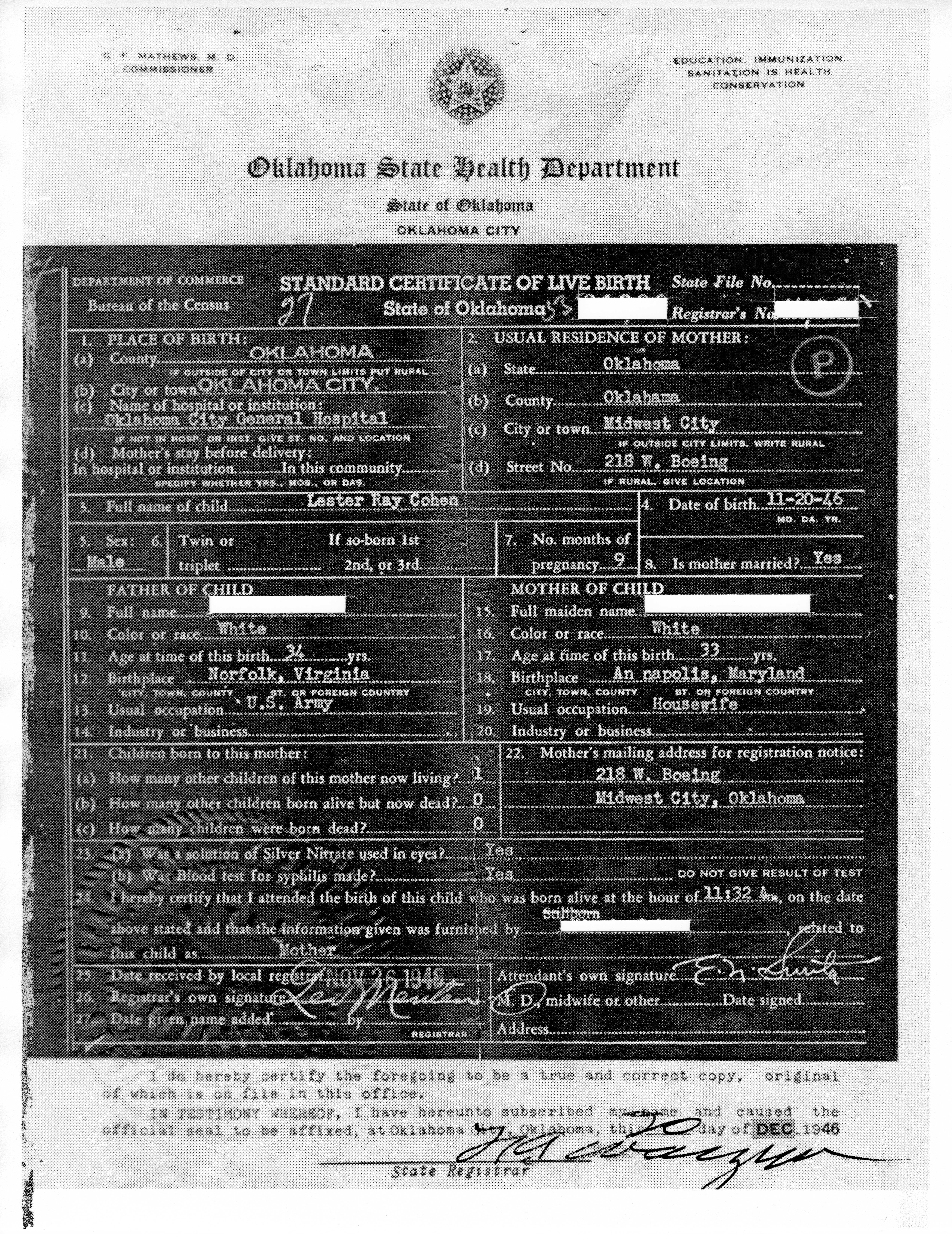
Except for a few details, this is a true accounting
of actual events as told to the WordFeeder by one of the principals
in the story you are about to read. The embedded birth certificate has
been redacted to protect the identity of one of the principals
and his family, but is nonetheless real.

“So did ja read it yet?” It was Stallings habit to come into his colleague’s office without knocking, and tonight was no exception. Knocking conveyed a certain respect that might suggest that he and you were equal, and that wasn’t something he would ever concede.

“Read what?” Penelope responded, not bothering to look up. Looking up would let her intruder conclude that he could command her attention which he could, but only if she let him.

There’s was a world in which everything counted.

They had slept together… Wait. No, that’s too romantic a way to put it. More like they had sex together once over a year ago. Her team had been going nonstop, around the clock on a special project. No sleep. Lots of pizza. They both needed a break and took it on her couch. Twenty minutes later, they were back to work.

“This,” he told her, throwing a classified file on her desk, causing the two short piles she had in front of her to mush together as it landed, covering up the form she was filling out when he’d walked in.

“Hey!! You think maybe you shouldn’t piss off the superior who writes your evaluations?!” Her voice was calm enough, but she wasn’t kidding… and he knew it. “What is this?” she asked, still not looking at him, turning in her chair to put her shoeless feet, crossed at her ankles, on the corner of her desk she kept clear for just that reason.

“An entry level NSA researcher picked it up off some guy’s family blog when it tested positive for the query we sent them.”

“Remind me…”

“The one that looks for references to suspect births, 1940 to 1950, that meet the profile our psycho-bananas consultant gave us.

“You know, I’ve never seen him without his lab coat.” It was rhetorical observation not meant to solicit a response, her eyes skimming the disclaimer on the cover sheet, paying special attention to the signatures of those who had seen it recently. “Where was this one?”

“Oklahoma. 1946. It was part of a memoir written by his mother when she was gravely ill, about a time when she was a delivery nurse, just after the war. Take a look. I’ll get us some coffee.” And he left.

Opening the folder, it seemed for a moment that she couldn’t move her eyes off the title, but she did and read the copy of the handwritten text the blogger had published. His mother was from an age before computers, and had never learned to type. Her penmanship was steady, deliberate and easy to read despite the woman’s advanced age and condition.

Oklahoma City, November 20, 1946, just after 10 AM.

It had been a slow shift since I had come on at 8 when it was still cool enough that the air flowing from the open double doors at the end of the corridor near the maternity ward made the place bearable. Later on that day, not even the large floor fans we had would keep me and the other staff from perspiring through the starched white outfits which were required wearing at the time. I remember that day because it was unseasonably hot, but mostly because of the one military couple that came in from Tinker Field whose delivery made me question what I believed and, more importantly, what I didn’t. You know, son, I’ve never been a particularly religious person. Looking back now that I face the end of me, this is the one event in all the years that makes me question whether or not I might have missed something.

They were in their early thirties. He was a Captain in new Air Force they created after the war. With nothing more than a simple infirmary on the base, he had taken the chance to drive his wife to our hospital, fearing that, if it was a problem delivery, the corpsmen at Tinker wouldn’t be able to handle it. It was a risky decision given her condition and the distance, but these were determined people. The mother, in particular, was going to have her child, regardless of the cost. What irony that the Captain had survived three years in the war unscathed, only to come back to have his wife’s life threatened by something so routine as the birth of their second child.

She was a slight woman, barely 5 feet tall, weighing just 100 pounds before she had become pregnant. Labor had actually started more than a day earlier, slowly, with its intensity and the timing of contractions coming and going unevenly. When she arrived, we found her in agony, writhing in pain. The child, still inside her, was huge relative to her size, and was cavorting, turning and rolling, fighting to get out. Nowadays, they would have done a Cesarean, but not then. For whatever reasons, the doctor agreed to a vaginal birth.

As was the habit at that time, the Captain stayed in the waiting room while his wife fought alone, with the doctor, me and another nurse, to push out her son. After what wasn’t more than 20 minutes, the wife began to deteriorate, the medications we had given her having done little to resolve the difficult situation in which she and her baby found themselves. Even without the monitors and other technology we have now, it was clear they were both in serious trouble. Sending the other nurse for a second doctor to assist him if necessary, the attending went into the waiting room, just outside, to speak to the Captain.

So quickly had the doctor been moving that the swinging door to the delivery room had become stuck open, and I could see the Captain rising to his feet. Fearing the loss of the baby, or the mother, or both, the doctor asked the Captain, if it were it necessary to make the choice, should he save his wife or child. It was a question he had to ask, given the religious beliefs of some of our patients, but these were Jewish people and I’m not sure it was a problem for them. I remember the Captain looking past the doctor, into the delivery room, the full weight of what he would say clear on his face. “You save my wife, doctor,” he said without the least uncertainty in his voice, turning his head to face the physician to make sure his decision was clear. “Save my wife.” (I remember wondering later if I would ever hear a more profound statement of love given what he stood to lose. Whatever his beliefs, they served him well.) His voice was resolute, its sound hanging in the warm air while his eyes followed the doctor who rushed back into the delivery room, the second doctor and the other nurse almost running down the hall right behind him.

Half an hour later, it was over. The lifeless body of their son lay unceremoniously on bloody towels in a tray on a table along the far wall while we continued to help the mother. The other nurse, so affected by the loss of the child, left to start the paperwork, so she said, but no one could blame her, and I did my job trying not to look up and across the room.

It was then, son, a full five, maybe 10 minutes after the delivery, that I heard… no felt is more like it, the sound of a hand reaching into my head, as if to pull my mind toward it. I felt panic and fear, not that I had felt before, but what I realize now was the dread and sadness of pending death. I felt life slipping away uncontrollably – I cannot, even today, explain the power of this calling, the memory of which time has done nothing but enhance. – and found myself drawn away from the wife, semi-conscious on the delivery table, to the baby, still motionless where the doctor had laid him to rest.

What I did next was by compulsion, by the instructions of an unseen intelligence, something so primal and yet so compelling, I had no choice. Picking up the child, still wet from the delivery, I shook it violently, back and forth in front of me, and then I stopped. The doctors were no doubt alarmed, but I wasn’t paying attention, not to them, still holding the body of the baby a foot in front of me. And then, as if nothing had happened, his head shook back and forth on its own, his eyes, never cleaned after birth, opened, and his color began to normalize, his legs and arms beginning to move normally. And the fist in my head went away as suddenly as it had arrived.

I was surprised, pleasantly so, to find out years later that the child had not only survived, but appeared to be normal in all respects and, in fact, quite intelligent. You had to have been there, son. Far from thinking these to be the ravings of a sick old woman, it was, as you’re fond of saying, an experience you can take to the bank. I’ve seen an old photostat of his birth certificate, the word “stillborn” typed in, then crossed out. (I’ve enclosed that copy for you to see. Take good care of it.) Make what you want of what I have told you, but it was real and says something, although I don’t know what, about the human condition and about a certain power we may all have within us.

“Well,” Stallings asked on his way back into her office, the frosted glass door to her office still closing behind him. “What do you think?”

“I think it’s a curious story, that we should get a copy of the birth certificate and see where it takes us, but that Beaker,” her pet name for their scientist consultant, “has his pocket protector up his ass.”

“Here,” he said, reaching across her desk to hand her the coffee he promised, the sound of his voice muffled by the oversized bite of the cinnamon bun he was holding. “Want some?”

“What, after you’ve had your mouth on it?”

“That didn’t used to bother you.”

“Jeeze, you’re so repulsive sometimes,” she spoke honestly and quickly which was always her style. “What about the birth certificate?” She didn’t have time for his nonsense.

“Gone. Missing. The son never got it, and the original’s long gone.”

“Okay, trace the kid through his father’s military record. There couldn’t have been that many Jewish Captains at Tinker Field on that day in November. And do it yourself,” meaning, as Stallings knew she did, that he should keep it to himself, entirely on computer if possible, without hinting at the importance of any inquiries he’d have to make.

“I’ll take care of it. …You don’t buy this theory about near death birth experiences, do you?” Stallings asked a serious question, trying to get back into her good graces by focusing on the task at hand.

“Beaker says that there’s a kernel of intelligence, a core life force in our brains that is the last thing of us to die, that cries out at the end in one last desperate attempt to get help. That I’m willing to buy, but can a near death event ignite something, some special capability in an infant? Can that child grow up, perfecting its ability to reach out to other minds, to become our mission’s target?”

“The one that comes and goes, and can never be killed?” Stallings recited the popular legend. “The one with telepathic powers and who can move things with his mind?”

“Yeh, that one. Telepathy, maybe, using very low power bio-chemically produced electromagnetic waves, having perfected his ability to control and interpret their frequencies. Maybe. Telekinesis, on the other hand would require substantial forces way beyond what any human can produce outside the SyFy channel.” Clearly annoyed by it all, she was busy reorganizing the papers on her desk. “I think it’s an agency myth and that we’re wasting my team’s time and money. Now get the fuck out of here and do your job.”

Standing up from the chair in the front of her desk, taking one last look at the front of the sleeveless t-shirt was wearing – because he was a creep and couldn’t help himself – he turned toward the door only to be surprised by the man, in his early 60s, standing inside Penelope’s office just a few feet in front of him. “Who.. When did you…,” and his mind went blank, his body, limp but still standing.

“Wait over there,” the man said pointing to the open space on the wall next to the bookcases. And that’s exactly what Stallings did, hugging the wall, his shoulders down as if he had been shamed by his third grade teacher, Mrs. Cronmiller, and told to stand in the corner.

“Hi, honey.”

“Hey, Dad.” By the smile on her face and way her eyes opened, it was clear she was glad to see him, although they talked frequently, even if there was no phone or e-mail involved. Even now, just in case someone was listening, everything he said and she asked or answered was in their heads, mind to mind. A sort of dampening field he radiated allowed him to move unnoticed by those who would see him. Her agency records said she had been adopted by a wonderful couple, now diseased, but made no mention of the man being her biological father.

“Is bozo going to be a problem?” he needed to know, for his own safety and hers as well.

“No. He won’t remember any of this, just what I want him to recall, and he won’t follow up. Besides, I’ve already fixed Grand Daddy’s military records.”

“Thanks, honey. Anything you need me to look into for you?”

“A couple of things. Why don’t you buy me dinner at that roadhouse you love, where the band is too loud for anyone to hear us, and we’ll talk about it?”

And he smiled back, knowing it would, as always, be the highlight of his day. Looking at Stallings, still standing there in the corner, he turned and opened the door, sending Agent Bozo through it and back to his office without his suspecting or remembering a thing.

-wf

What to read more? Just click here and pick a title you like.

Copyright as of the title date or earlier, by me.
(I write the WordFeeder blog.)  All rights reserved.
Email WordFeeder@verizon.net for additional information.

The US Policy Against Assassination: Where should we draw the line?

Saturday, July 11, 2009

As we all know, it is against US policy to assassinate the leaders of foreign governments. My first reaction to this rule has always been positive. Killing anyone is a bad thing, even in self-defense. It may have been justified. It may have been necessary to save your own life, or the lives of family and countrymen, but it’s still a bad thing to have to kill anyone. I say this on moral grounds, intellectually speaking, having never found myself, thank goodness, in the position of having to take someone’s life to protect my own or the lives of others.

Government leaders are high profile people who are relatively easy to kill. Getting away with it is another story, but if you’re motivated and have sufficient resources at your disposable, it’s doable. Doable, maybe, but does it make any sense? Is a practical thing to do? We kill their President, they kill ours. What a mess. There are consequences, short- and long-term repercussions that are often unpredictable and counterproductive to our objectives. Moral issues notwithstanding, assassination is bad politics and no substitute for good foreign policy based on intelligent diplomacy.

So what’s my problem? My problem is that I’m not sure where we should draw the line. On a personal level, if someone threatens you with deadly force, with a loaded gun for example, if they present a “clear and present danger,” well, you have every right to defend yourself. In fact, you have the legal and common sense right to take preemptive action. You do not, in other words, have wait until you’ve been shot at to shoot back.

On a societal level, the police and our military overseas routinely hunt and often kill people who have demonstrated their willingness and ability to take the lives of innocents. A South Carolina serial killer – a lone gunman who was clearly not the leader of a sovereign nation – was himself recently killed in a shootout with a policeman. For similar reasons, our military, acting as our national police force overseas, has killed a good number of Al Qaida leaders and operatives – and is still aggressively looking for Osama bin Laden, dead or alive.

However many his followers, Mr. bin Laden is also not the leader of a sovereign nation. He’s a criminal, a murderer of innocents who routinely and repeatedly demonstrates his disregard for the lives of his followers and enemies alike. In every way I can imagine, bin Laden meets the criteria for a “clear and present danger” deserving of the use of lethal force, if necessary, to stop him. I have no reason to believe that bin Laden, himself, has ever killed anyone. Doesn’t make any difference, does it? Even if he’s never hurt anyone, personally, he’s recruited, trained and commanded his followers who have.

But what would happen if Mr. bin Laden was the not just a criminal on the run, but a head of state, the elected leader or dictator of a sovereign nation? …a head of state using national resources to recruit, train, arm and surreptitiously command followers whose demonstrated purpose is to kill innocent Americans and other nationals, perhaps including his own countrymen? Now what?

Our best, most civilized diplomatic efforts fair to even curtail, let alone stop the carnage. Other nations add their voices, but to no avail. Do we just let Mr. bin Laden hide behind his government title? If, heaven forbid, bin Laden or his counterpart in the Taliban were to seize control of the government of Afghanistan, is that it? Are they safe? Does the mantle of authority, democratically elected or not, somehow suddenly change everything?

Given that our government believed in the imminent threat of weapons of mass destruction, was the assassination of Saddam Hussein out of the question just because he was the leader of a sovereign nation? If Kim Jong-il’s North Korea poses a real, clear and present nuclear weapons threat to the United States and our allies in the region, and we believe that he, personally, is the problem, isn’t a preemptive assassination a more rational solution than war? I’m not suggesting it, mind you, just raising the question.

If it was up to me, what would be the fine print in our government’s policy against assassination? I don’t know, and it bothers me that I don’t.

-wf


Site Meter

Michael Jackson: Is anybody really this popular?

Tuesday, July 7, 2009

Of course not. Michael Jackson’s remarkable talents and popularity as a pop star notwithstanding, his celebrity since his death, culminating with today’s memorial service at the Staples Center in Los Angeles, is all about the media – with the music industry deserving honorable mention for the huge profits which those who have a financial interest in the Jackson legacy stand to earn.

Make no mistake about it. A billion people world-wide did not call the television and other media and demand wall-to-wall coverage of Michael Jackson since he died. Just the opposite.

People are watching TV all the time, myself included. It’s the Muzak, if you know what I’m talking about, the ambient sound of our times. Something interesting happens, and we perk up and pay attention. That whatever’s happening involves good music with which many of us can identify, not to mention a free concert, makes it all that more compelling. The more weird, sometimes, the better. (Are they really going to bring Michael Jackson’s coffin to the Staples Center?) But if we didn’t have a TV on in the background, if we had anything better to do or that required our undivided attention… Well, it’s only TV, and we can catch the highlights later on the news, and buy the CD if we’re really interested.

Just because some marketing company puts your face or product up on a really big sign at Times Square doesn’t mean that the thousands and thousands of people a day who walked or drove by came there to see it.

Yes, I find it annoying when otherwise world class interviewers like Matt Lauer and others talk about the Michael Jackson phenomenon as if it were real, as if it would exist independently of the extraordinary coverage the media is giving it. The media helped elect Barack Obama, and is certainly doing more than it should to create the Legend of Michael Jackson. I wonder who or what they have in store for us next?

In an industry where relatively few people are in charge of so much coverage, and in which even fewer set the pace for the others, is there reason to be concerned about our view of the events they broadcast, not to mention the ones they don’t?

It’s difficult, sometimes, to keep things in perspective – and next to impossible to know much about what the media isn’t covering, however important.

-wf


Site Meter