
Tuesday, June 15, 2010
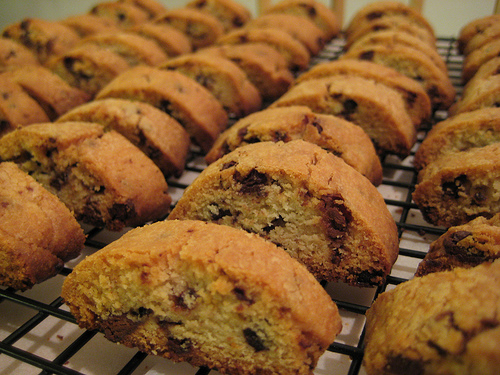
Mandel (pronounced “mahn-dle”) Bread, if you don’t know what I’m talking about, is Jewish biscotti. I like to call it “Miracle Bread,” because I believe it is miraculous that it stays together despite the fact that it has, in my opinion, negative moisture content, if that’s possible. You think you understand the meaning of the word “dry”? Well, you don’t have a clue what you’re talking about until you’ve tried some, Mandel Bread that is.
However tasty, Mandel Bread is best consumed in small bites which can be difficult to swallow without a beverage, hence the tradition of dipping it into something. Just be careful not to overdo it. Too much Mandel Bread at one time and you won’t see saliva in your mouth for a month. Two or more pieces at a time will turn you into a raisin.
The absorptive powers of Mandel Bread are legendary. Even an undergraduate student in ancient history knows that Moses didn’t part the Red Sea, not exactly, but that the Jews, in a hurry to get the hell out of Dodge, spilled cartloads of freshly baked Mandel Bread which soaked up the water and allowed them to pass. It’s true. That’s the way it happened. I know this because my Grandfather told me, when I was a kid, that he was there and knew Moses personally.
And so, flash forward a few thousand years, the solution to the Gulf Oil problem is simple. First, we need to replace BP CEO Tony Hayward with someone who’s Jewish or Italian. (The British like to make scones, but they’re not nearly as effective.) Second, get everyone to work baking Mandel Bread and dump the finished product directly onto the oil in the gulf. I’ve done some calculations, and determined that less than 100 pieces using my Grandmother’s negative moisture recipe should do the trick. Hell, 200 pieces of that stuff will suck up enough sea water to offset the effect of rising sea levels associated with Global Warming.
Jeez, that was easy.
-wf

 WordFeeder