Category Archives: Science Fiction

Organic Gardening

Short Fiction for Guests of the WordFeeder
Sunday, September 27, 2009

The wrapping on the front door to Marion’s suburban house was unusually hard. Whoever it was, he – “It has to be a man,” she thought to herself, apprehensively. – had decided to ignore the bell in favor of a less demure announcement of his arrival. There were people coming over at 3 PM, but that was, what…? She checked her watch as she grabbed a towel to wipe her hands on her way out of the kitchen, throwing it over her shoulder. …22 minutes from now.

Whoever it was knocked again, well less than a minute after the first time. In the hallway now, she was relieved to see the face of “Al” (Alison) Jacobs, her face peering in the glass panel beside the door. Dr. Jacobs had been her physician for more than a decade since her husband had died and she’d moved here to take the only college-level teaching job she could find at the time. Turns out, it was a good choice, a place to make good money and even better friends. “Hey,” Al waved to her. Relieved to see it was someone she trusted, Marion picked up her pace and closed the last few feet quickly.

“Hi. You’re early.” She was talking to Al, but studying the faces of the man and woman she didn’t recognize, the man first, then the woman and back to the man standing directly in front of her.

“Mrs. Abrams,” the man began to announce himself, extending a business card which Marion took from him. “I’m Special Agent Collier. This is my associate, Agent Macy,” he moved his head toward the woman standing behind and to his left, “who called you this morning. “May we come in?”

“Of course.” Marion opened the door all the way, stepped back and gestured to the great room where she had freshly made cookies, a few small bottles of water and a pitcher of ice tea nicely arranged on the coffee table around an open space in the middle she’d saved for something. “This way. We can talk in here. It was fall, but still comfortably warm and no coats to worry about.

Agent Macy handed her card to Marion on the way in, accompanied by a perfunctory smile while being certain to make the requisite eye contact her recently completed training demanded. She would forgive the young agent’s inexperience, but looking someone in the eyes standing that close to her made Marion want to squint.

“Thank you,” Doctor Jacobs was the last one in the door, and the only one of the three who seemed comfortable being there.

“Please, make yourselves at home. I’ll be right with you.” That courtesy out of the way, Marion went to her refrigerator and took out a tray of a dozen turkey, goat cheese and arugula sprouts sandwiches she had made on small homemade croissants.

“As you can see,” she commented in an attempt to lighten the mood, as she placed the tray in the center of the table, “I watch entirely too much Food TV. …Please help yourselves.”

Agent Macy, seeing the sprouts protruding artistically from under the perfectly baked crust above them, paused in mid-reach. “Maybe later,” she announced tentatively. “They look delicious,” which they did, she said politely with another attempt at a friendly expression. Marion wondered to herself what Macy would be like if she weren’t on duty, if Special Agent Collier weren’t there – and what made him so “Special.”

Making herself comfortable in her favorite corner of the couch where she’d thrown her sweater to make sure no one sat there, Marion decided to take the lead. Dr. Jacobs was also on the couch to Marion’s left, the two agents having sat in the chairs across from them. “So, uh, what’s this all about? …When Al, ‘Dr. Jacobs’ called yesterday, she said it was important that we meet as soon as possible. That wasn’t 24 hours ago. What exactly’s..”

“Mrs. Abrams,” Agent Macy didn’t wait for her to finish, “you had an appointment yesterday with Dr. Jacobs for a routine physical, is that right?”

“Yes. Nothing special, jus..”

“And while you were there, Dr. Jacobs observed a small scar on your abdomen?”

“Yes.” It was obvious that the FBI agent, who was following a list of questions she’d typed up and were on the left of her portfolio, a yellow legal pad for taking notes on the right, preferred short answers.

“And you indicated that it was the scar from a voluntary operation in which you gave up one of your kidneys to a non-profit organ live-donor program?”

“That’s correct. I’m only 37, in good health. Why not help someone else who might not make it without me?

There was quiet.

“Mrs. Abrams,” it was Special Agent Collier talking now, “when did you first think about donating your kidney?”

“Uh, I don’t know exactly. I’m an organ donor, you know, in case of an accident or something and I don’t make it. …More recently, my friend Joan… She and I have been taking evening classes, part of the Chef’s program offered to adults at the college where we’re on the faculty. We were joking about growing our own fresh herbs and vegetables, and she dared me to plant some arugula – I just love the stuff. – on my deck. …So I did.”

“How exactly did you do that, Mrs. Abrams?” Agent Macy was asking this time, determined to go through her list of questions.

“What do you mean?”

“I mean, how exactly did you plant the arugula? Did you buy small starter plants? Seeds? Did you buy them locally? Through the mail? What, precisely, did you do?”

“Well, uh, …Joan gave me a website, ‘AuntMinniesFreeSeeds.org.” It’s a non-profit that sends you free seeds for vegetables to encourage people to grow their own healthy foods.”

“Is that what you did, you went there, on-line, and ordered some of their seeds?”

“Sure. For arugula. The stuff grows almost overnight. I didn’t know things grew that fast, and the arugula you get is… Well, it just tastes great, so much better than the mostly non-organic produce you buy at the store. Really delicious. It’s on the sandwiches.” Marion reached to lift of the tray of croissant sandwiches no one had sampled yet. “Here, try one,” but then realized there were no takers. It was quiet again as she put the tray down while she half-heartedly delivered the Aunt Minnie’s slogan, “You know, ‘Home grown vegetables with the flavor that out of this world.’”

“What do the seeds,” Agent Macy continued down her list, “have to do with your donating a kidney, Mrs. Abrams?”

“Well, on the website and on the DVD they send with the seeds – Loved it, by the way. Must have watched it a dozen times. I’m doing carrots next, I think, and then the herbs. Anyway, they make a pitch for you to donate a kidney, to be a live donor, to appreciate what you’ve done for someone else while you can. …It was… compelling and I decided not to wait and contacted them.”

“You called Aunt Minnie’s?”

“No, they give you a toll-free number to call to make arrangements for you with a local hospital. A nurse came over and took a medical history, gave me a simple exam, took a blood sample, gave me diet advice, you know, to make sure I was eating well – lot’s of arugula!” She laughed, but was the only one who thought it was funny. “The darker the vegetable’s color, the better it is for you,” she said tentatively, wondering if either of the agent’s could have cared less. “Aunt Minnie’s arugula are unusually dark… dark green.” They were just letting her talk.

“Was that the last time you saw the nurse before the operation?”

“No, there was another blood sample a month later, and then she called a few days after that to set up an appointment. They picked me up, took me to the hospital for outpatient surgery, and I was home that evening.” The blank stares on their faces was beginning to trouble her. “Everything went great.”

“Marion.”

“Yes, Dr. Jacobs.”

“Would you mind lifting your t-shirt and pulling down your sweats just a bit to show us the scar? I’m sorry to…”

“No. It’s okay,” Marion got up from the couch, turning slightly toward the two agents. “It’s almost gone.” And so it was, with only the faintest of lines still showing, almost unnoticeable.

Taking an 8 by 11 print out of the file folder she brought with her, Dr. Jacobs showed it to the agents. “This was taken yesterday afternoon, around 4:20 when Marion and I were finishing up. As you can see, the scar was minimal then, but still much more prominent than it is now.”

“Today’s Saturday, Mrs. Abrams. You had the kidney removed on Monday? Last Monday?”

“So?” The answer was “Yes,” but she didn’t get the point of the question.

“Marion, this incision should still have the stitches, shouldn’t be close to healing. In fact, there’s no indication there ever were stitches or staples. As best I can tell, it must have been glued shut, but I’ve never seen anything this neat. Surgical scars usually take years to disappear, if ever. …More to the point, the CT scan we did…”

“Are you saying they didn’t actually remove my kidney.”

“No, they took it out, it’s just that the scan shows that it’s growing back, and fast. A couple of weeks from now at the rate it’s growing, we’re not going to know you ever gave one up in the first place.”

“ So,” Marion was beginning to get the point, “how rare is this, Al?”

“This is never, Marion. I honestly don’t know what’s…”

“Mrs. Abrams,” Special Agent Collier interrupted, not wanting the Doctor to speculate or tell her too much. “You say they picked you up to take you to the hospital?”

“Yes?”

“Well,” hearing the inflection in Marion’s voice, “did they or didn’t they?”

“Look, what are you getting at? I told you, they picked me up.”

“Mrs. Abrams,” Agent Macy seemed concerned that her superior was being too severe. “One of your neighbors, the retired couple in the house with the blue siding across the street…”

“Yes, I know who you mean. The ‘Franks.’”

“That’s right. Apparently they were working in their yard Monday morning, mulching, planting some new bushes to replace the ones the deer have been eating.”

“What’s your point, Agent Macy?” Marion was getting impatient and more than a bit anxious.

“They told us that an ambulance picked you up around 10 AM. That someone knocked on your door…”

“The nurse I told you about.”

“…and that you got in the back of the ambulance and left with them.”

“That’s right. I told you…”

“And that you were back before 11. They know, because Mr. Stevens, your mailman, dropped off the mail and he never comes after 11. Never. They’re retired. Apparently getting the mail is a big deal for them. Letters from their grandchildren, occasional orders for some costume jewelry Mrs. Franks makes and sells on-line.”

“That’s pretty much true, I mean that the mail comes in the morning, but so what?”

“Mrs. Abrams, the ‘So what?’ is that you were gone for less than an hour. You told us you didn’t get back from outpatient surgery until late the in afternoon. An hour isn’t enough time for you to get to the hospital, do the surgery, recover and get back. Our specialist…”

“And I agree, Marion,” Dr. Jacobs wanted Marion to understand that what Agent Macy was saying made sense.

“…the surgeon who’s working with us says you should have been kept overnight.”

“More to the point,” Agent Collier’s voice commanded a whole higher level of attention,” there’s no hospital or clinic within 100 miles of here has any record of your checking in or any surgery that could have anything to do with removing your kidney – or transplanting it or sending it to any recipient.”

“But I remember going to the hospital. I got home. Turned on the evening news in my bedroom and slept for about an hour.” And Marion decided to stop talking. Feeling herself breathing faster, she remembered not to hyperventilate like she did twice when she was in college.

“Marion,” Doctor Jacobs say the change in her patient’s face, “are you okay.”

“What are you trying to tell me?” Her voice was resolute now, Marion’s mind pushing its way through the reality she was just beginning to fully appreciate.

“There’s more, Marion.” This morning, after I called Agent Macy – The FBI had sent a bulletin to doctors in the area to look out for situations like this. – I called the lab and had them pull a blood sample you gave us a year ago. They’ve started saving small samples in case we need a baseline for some reason. With your permission, I’d like take a fresh sample today. I’ve got my bag in the car.”

“Why? What are you looking for? Am I sick?”

“We don’t think so,” Agent Collier tried to reassure her. “At least none of the other cases have had…”

“What other cases?”

“There have been others, 74 that we know about, in three states. All of them bought seeds – genetically altered seeds – from the same website, watched the save DVD and ate what they grew. Exceptionally rapid healing, and the kidneys they had removed grew back. Three of the 74, as far as we know, actually donated their kidneys a second time before we found out about it.”

“If I’m okay, why do you need another blood sample, Al?”

“Because the others have experienced changes to their DNA.”

“What?!”

“I know, I know, Marion, it sounds… Well, I know how it must sound. The FBI has some of the best geneticists in the country working on it. …Marion?”

“What do I do now?”

“We’re going to have an FBI psychologist work with you. Here’s her card. She’ll call you tomorrow. She’s heading up the team that has been studying the DVD and any hypnotic suggestion it may have given you and the others.”

“By the way,” Agent Macy added, “the same thing’s happened to your friend Joan, except that we caught her before they picked her up. …And now she can’t reach the nurse, and the website’s gone.”

———————-

Two hundred eighty-seven miles away, at the small grocery store that served the rural town too far from the nearest city of any size…

“What are these, Bobby?” Jake, the Manager, one of his part-time stock clerk who worked there weekdays after school.

“They’re free samples of herbs from a new organic supplier. …Here. This is the sign that goes with it. There’s a website people can visit for more free samples if they’re interested. …Should I put them out?”

“Yeah, I guess so.”

“Here’s the packing slip that the driver gave me.”

“Thanks. …Let’s see,” he began reading out loud, “‘For more samples and information about our seeds and other ready-to-eat produce, e-mail AMinnie@OrionOrganicFarms.us, Delicious locally grown organic herbs and vegetables, with flavor that’s out of this world.’ …Yeah, sure. …Okay, let’s get them out there.”

-wf

What to read more? Just click here and pick a title you like.

Copyright as of the title date or earlier, by me.
(I write the WordFeeder blog.)  All rights reserved.
Email WordFeeder@verizon.net for additional information.

Guardian

Short Fiction for Guests of the WordFeeder
Sunday, August 16, 2009

Between every parent and child there is a certain magic
which the fear of an innocent can call upon
to prevail in the darkest of situations.

Lieutenant Roberts, in his late 30s, a senior Detective with the same police department where he started work after college, was all too used to getting calls in the middle of the night. It had been one of his earliest realizations that he would grow up and live his life in the state of his parents and grandparents. This place was his home and these people, all of them, were family, whatever time of day or night they needed his help.

Having been asleep when they called him, by the time he arrived before dawn that early summer morning he had to pull up a few houses down from the crime scene and walk towards the police cars and ambulances that were in front of the Colby’s two story colonial. It was a nice neighborhood, one of the newer subdivisions in this county that couldn’t resist the lure of growth.

Rushing up to where two ME Assistants were rolling a body bag down the driveway, he saw Detective Sclorowsky look up from the notes she was making to greet him. Recognizing the look of concern on Roberts’ face, she didn’t waste any time bringing him up to date.

“That’s one of the two that broke in,” she started, gesturing over her shoulder toward the open rear doors of the ambulance nearest to where they were standing. “The other one, also dead, will be out in a minute.”

“And the…”

“No one in the family was badly hurt. Just the mother and her 5 year old daughter were at home. The father’s out of state on business, but on his way back now. He should be here in a few hours.”

“Just the mother and a 5 year old took out both of them?”

“Not exactly. …Let’s go inside. You’ll need to hear this for yourself.”

The house, still busy with police officers and forensic specialists, was good sized, but not huge, comfortably furnished with the clutter and stuff of life here and there where you’d expect it to be. Waiting for them inside, the mother sat nervously on a love seat in their family room, her daughter next to her, her feet stopping a few inches short of the rug that covered the center of their hardwood floor.

Detective Sclorowsky pulled up the leather chair from the other side of the room, but Roberts wanted to be closer and sat on the refinished wooden trunk they used as their coffee table. Both women seemed remarkably calm, the events of the night not having fully affected them yet. That would happen soon enough which is why he had to talk to them now before they became any more distracted by the reality of what had happened. With some people, you have to wait a day or two. Others were best when you talked to them right away. Over the years, he’d learned to tell the difference.

“Hi, Mrs. Colby. My name is Jacob Roberts. ..and you,” he smiled ever so slightly, turning a bit to his right, “must be Emma.”

The little girl nodded her head up and down, but said nothing.

“Mrs. Colby, I know you’ve been through all this before with Detective Sclorowsky but, if you could, tell me the basics of what happened.”

An attractive, slender brunette with wavy shoulder length hair, she looked remarkable given what she’d just been through. Outward appearances aside, it seemed for a moment that she wouldn’t be able to speak. A large bruise was coming to the surface of the left side of her face where an EMT had clamped and bandaged a cut. “Mrs. Colby?”

“Emma and I have trouble getting to bed sometimes when Michael’s out of town, so we stayed up late, watched a movie together and fell asleep on the couch,” looking up and over at the overstuffed three cushion sofa against the wall behind him. “I don’t know when exactly, but I heard noises coming from the basement. It’s a walkout and I was worried someone might be someone trying to break in. Sometimes I hear sounds from the woods, deer that come up to eat the bushes around the deck, a fox sometimes, but this was different.”

Her voice was steady and deliberate as if she had to concentrate to get the words out. “Did Emma wake up, too?” he asked, thinking it best to interrupt her now and then for her to hear the sound of his voice.

“No. ..No. I…”

“Mommy woke me up.”

Impressed that the little girl was taking the initiative while her mother was clearly stuggling, he turned to encourage her. “What did she say, Emma?”

“She told me the truth. That’s what we’re supposed to do in an e-merg-en-cy.” It was a longer word she had trouble pronouncing.”

“What exactly did she tell you?”

“Mommy said it was the middle of the night, and that there was noise in the basement she was worried about.” Her confidence building, the little girl was relaxed now and anxious to help. “She told me to sneak upstairs, very very quietly, and hide in my bedroom closet while she called 911.”

“Is that what you did?”

“Of course,” Emma responded, almost as if she was wondering if he’d been paying attention.

“And, Mrs. Colby,” Sclorowsky wanted her to include a detail Roberts wouldn’t have known to ask about, “you didn’t call 911, at least not right away, did you?”

“No. I keep my phone on a…,” she paused to catch her breath, “on a charging stand on the counter there,” she explained, pointing toward the kitchen at the other end of the room, past the table where they ate most of their meals. “I came around there, past the refrigerator, but never made it.”

“ …The first one of them came up the basement stairs,” through the doorway just outside the kitchen, “and grabbed me from behind, bringing his arm diagonally across my chest, like this.” She used her right arm to demonstrate. “I could hardly breathe. ..The second man was right behind him, but went off somewhere, while the first one pulled me down the stairs, back into the basement. I tried holding on the molding around the door and then the banister, but I couldn’t get on my feet – and then I thought, maybe when I got downstairs, maybe I’d be able to fight him off. It’s my house. There’re tools in the shop if I could just…” She was starting to have trouble.

“Keep going, Mrs. Colby. You’re doing great.”

“And then he threw me over… It’s open, the stairs are open at the bottom. He threw me over onto the floor. I must have hit my head on something. I’m not sure. It was dark.”

“And you called 911 when you regained consciousness?”

“Yes. When I woke up, it couldn’t have been too long that I was out, I remember hearing screaming and crashing sounds on my way up the basement stairs. That’s when I picked up my cell phone and called the police.”

“Emma?”

“Yes, Detective?” Her formality would have been cute under different circumstances.

“What was happening upstairs, Emma, while your mother was in the basement? What happened in your room?”

She paused for a moment, as if wondering if she should tell him.

“Go ahead honey,” her mother prompted her, reaching out to touch Emma’s hand that was pressing on the cushion between them. “Tell Detective Roberts what you told me.”

Looking up at the Detective, she answered his question with certainty. “Guardian protected me. The two men came into my room, and Guardian protected me just like Daddy said he would.”

“Just Guardian and the two men?”

“Uh huh. ..It hardly seems fair, does it? To the men, I mean.”

Leaning back to distance himself from the little girl, Detective Roberts needed to see her room. “Let’s take a break for a couple minutes. I just want to run upstairs and take a look at your room. Will you wait here for me?”

Once again, Emma nodded her agreement.

“Detective,” he said turning toward Sclorowsky, and the two of them stood up and left the room, on their way down the short hallway toward the stairs and to Emma’s room. “What’s Guardian,” he asked her with quiet impatience when they were out of the room, “the family dog?”

“No. It’s, uh, not a dog.”

“So what’s she talking about?”

“Com’on,” Sclorowsky started up the stairs first, “It’s the kind of thing you need to see to believe. The ME’s pulled the bodies, but you’ll get the point.”

Pushing open the door with her left arm, she moved to the corner of the bed, turning back to Roberts whose eyes began moving slowly from point to point in the mayhem he saw. The room was trashed. There was blood all over the place.

“The preliminary conclusion of the lead tech was that both men were ‘torn to shreds,’ his words, by… by something with very sharp teeth and claws, something powerful, strong enough to bounce a adult male off a wall,” she pointed to a large section of crushed sheetrock next to the dresser, “ and to snap major bones. All the wounds were rough. No precision cuts or holes that he could see. As far as he could tell, there were no manmade weapons involved. Ralph said, if we’d found the bodies in the woods, he be sure it was a wild animal attack.”

Roberts walked into the room, but not far, being careful where he stepped. The walk-in closet was to his right. “Are you absolutely sure there’s no way the kid and her mother did this?”

“No way. The mother was clearly beaten. There’s some blood on the wall across from the bottom of the basement stairs. I think she’s telling the truth. Besides, she’s what, 5’ 4”, maybe 120 pounds?”

“And the father? What about the father?”

“Asleep in a different time zone when all this happened.” Seeing her colleague wasn’t buying it, Sclorowsky turned back a few pages in the spiral notepad she was carrying to go over what Emma had told her when the two of them had talked earlier. “The kid is hiding in her closet, under a high bottom shelf, behind some plastic storage boxes. It’s not a great hiding place, but she feels good about it and can see the door. The closet light was off and the door, shut. Smart girl, she purposely left her bedroom door open so it wouldn’t seem so much like someone might be hiding there. ..There’s no lock on it anyway.”

That got Roberts’ attention, turning his head toward Sclorowsky, away from the gore of the room and its stark contradiction to the walk-in-the-park kids’ wall paper and phosphorescent plastic stars hanging from the ceiling. “She was thinking?” it seemed hard to believe. “With all hell breaking lose around her,” there was no missing the skepticism in the tone of his voice, “she was thinking that clearly? She wasn’t scared out of her mind? Paralyzed with fear?”

Sclorowsky ignored him and continued going through her notes… “So the two men come into the room, one checking under the bed, rummaging through the dresser, who knows, while the other one opens the closet door, looks down and stares right at her. The kid, knowing he sees her, shouts “Daaaaddddyyy!!!” at the top of her lungs, loud enough for her mother to hear her all the way down in the basement. It could have been what woke her up. It’s so loud, both men stop whatever they’re doing. Nothing happens. Zip. Emma says it was quiet for a couple of seconds and then the one looking in the closet door smiles at her, ‘eyes bulging,’ she told me. Looks left, looks right and says to her ‘in a really creepy voice,’ ‘So you were expecting what to happen?’ laughs and then starts to open the door the rest of the way to come and get her. …At which time she says it again, but this time not so loud and with a lot less confidence, ‘Daddy?’”

“All of a sudden, something dark ‘whooshes,’ according to Emma, around from behind the door, from inside the room, ripping into the intruder’s neck – which pretty much wiped the smile off his face. The man reaches up with both hands toward the arm that’s got him just as he’s yanked back, right off his feet, the closet door slamming behind him. There’s tremendous ruckus, noise of furniture crashing and adult men screaming – that even a neighbor heard. It’s suddenly quiet, so the kid gets up, pokes her face out the closet door, steps over the bodies and runs downstairs only to meet her mother on the way up. From what I can tell, the whole struggle couldn’t have taken more than a couple of minutes while the mother was calling 911.”

“And the Medical Examiner?”

“I’m telling you, the mother and the girl couldn’t have done this.”

“So what, they have a pet bear?” Robert’s asked facetiously, searching for a reasonable explanation. “A large housecat,” he tried joking, but the room wouldn’t allow it.

“No. They don’t have any pets. The daughter insists that Guardian did it. He was a gift from her father before he went out of town, to protect her. They just moved here this summer in time to get settled and ready for the school year. The kid didn’t want to move…”

“They never do.”

“…and has been withdrawn, so the father bought her the bear to make her feel safe.”

“I thought you said they didn’t have any pets? Besides, what kind of father buys his kid a wild animal?”

“No pets. Guardian,” she explained, moving away from the end of the bed from where she had blocking Robert’s view of the headboard, is the kid’s stuffed California brown bear.”

And there he sat, as true-to-life as stuffed bears get, about the size of a new bear cub, his faux fur perfect for hugging. Sitting up between two pillows, his plastic eyes appeared to be staring right at them, the expression on his face so innocent and friendly – except, of course, for the blood soaked torn piece of one of the intruder’s t-shirt hanging out the corner of his mouth.

“This is, what, some kind of elaborate prank?” Roberts was hoping it was.

Sclorowsky looked back at him, pursing her lips, shaking her head slowly left to right. “And we’ve got two bodies to prove it. …So tell me,” she asked, walking behind him going down the stairs, “just how do you want me to write this up?”

“Home Invasion Stifled,” so the local paper ran the story, “Intruders Killed By Unidentified Party.” There was even speculation that the killer was a third intruder upset that the other two we’re planning to harm the family. They could speculate all they wanted, Emma would always know what really happened. And the bear would follow her to college and to her apartment after graduation years later – fair warning to petty thieves and worse who might be so foolish as to pay her a visit.

-wf

What to read more? Just click here and pick a title you like.

Copyright as of the title date or earlier, by me.
(I write the WordFeeder blog.)  All rights reserved.
Email WordFeeder@verizon.net for additional information.

Bob*

*This is a story about Bob, a “Type A” person who is married to his work.

Short Fiction for Guests of the Wordfeeder
Monday, July 27, 2009

Two male coworkers at the high tech company where they were mid-level executives were on their way down the hallway – the one giving the other, newly hired, a tour of their offices, on their way to the nicest of them, the one in the corner just ahead. “Corner” wasn’t exactly true, given that the perimeter of the building was irregular and, at that point, traced a ark, like the cross section of a wing, more dramatically curved on one side (the leading edge), smoother on the other. It was empty, this nicest of all the offices, the large table that served as a desk perfectly clear as if no one had been using it.

“So who are they saving this for?” the new one asked his mentor, both of them standing just outside the one of the double doors that was open. Somehow going in, even though it was vacant, seemed out of the question. It was the only office on the floor that didn’t have glass interior walls and doors – where, if the doors were shut, you couldn’t tell from the outside what was happening on the inside.

“Don’t get your hopes up. It’s already taken. Belongs to ‘Bob,’ the creative genius behind all this. Ever have a conversation with one the new generation corporate voice mail systems, the one’s that make you think you’re talking to a real person?”

“Sure.”

“Well, thank you very much, all the way to the bank.”

“So what’s he like?” They were talking to each other, but with their eyes focused on the interior of the office, at its perfectly finished uneven plank floors, and at the almost too many plants and flowers, some inside, some on the deep balcony all around. The entire exterior wall was made of seamless glass panels that folded upon each other, to the left and right, to open the entire office to the outdoors. A gentle breeze just made to the faces of the two of them, feeding the wonder of what it would be like to work there.

This entire floor was the senior executive suite, the top floor of their terraced dome shaped building that all but disappeared in the topography of the countryside. From the air, it looked like a lush mound of dark and light green foliage, with random mixings of red, white, yellow and violet flowers that covered the edges of the various irregularly shaped balconies that were everywhere. A large center atrium in the middle of the floor, going all the way down to the basement of the building, added to a sense of openness, of almost being outdoors. Stairs lead up to the rooftop garden where they held indoor and outdoor meetings, and sometimes parties, when it was nice out and they could retract the roof. It cost a fortune to build, but was well worth it for the effect it had upon its residents during the long hours they often spent there.

“I have no idea. Never met him, and I’ve been here three years. He works from home. Communicates over the telephone or on-line with e-mail and video calls.”

“Excuse me.” Sounding highly rushed, a young woman pushed past them holding two bunches of fresh flowers which they grow in the complex.

“Jackie!” Another young woman was running down the wide hallway behind her, pushing one of the carts they give you in the company cafeteria when you’re picking up food and drinks for a meeting. The two men, not wanting to get in their way, split up and stepped back while Jackie opened the other door to Bob’s office to make room for the cart. They were there, the two men, but neither of the women noticed them. “I’ve got everything but the frozen pineapple yogurt he likes!”

“Com’on. It’ll be okay. He’s going straight to the Board meeting. We’ve got time.”

“What about the yogurt?” She was more than a bit frantic.

“First of all, it’s sorbet, pineapple sorbet. He has it flown in from New York. Call down and tell the Cafeteria Manager on duty that it’s in the Executive Pantry.”

“Hi, guys.” It was Bob who, in all their excitement, they hadn’t seen coming, standing between the two men, just outside his own office. A worn, soft leather briefcase in one hand, the other combed back the hair that flopped over his forehead to no avail.

He was tall, and thin too, taller than any of them had expected, his boyish good looks and warm smile leaving the two young women speechless, and the two junior executives invisible. Bob was the poster boy for purposely unassuming technology sector billionaires at their creative peak: Jeans and a plain gray t-shirt, untucked of course, with a blue and green plaid flannel shirt on top of it, open in the front, sleeves rolled up in a hurry. Well worn Nikes. Hair unkempt, but it could have been cut to look that way. If it was, the cut was so good, no one could tell. Money will do that for you. One of the girls would speculate later that he only shaved every third day, this being the second judging from the stubble, as if she had any idea what she was talking about.

“I just need to use my computer to print something out before the meeting.” His tone was apologetic, almost as if he were asking their permission.

No introductions. No shaking of hands. Nothing more than a polite “Hey” to the two men as he walked into his office and they headed back down the hallway, one whispering to the other, “So that’s what a billionaire genius looks like.” They, as if anyone cared, were wearing “business casual” to be safe and to remind the t-shirted staff under them that they were in charge. Bob, on the other hand, had nothing to prove and couldn’t have cared less that they were clearly in violation of the de factor company dress code.

“Do you want us to leave, …Bob,” she added reluctantly, having been told to call him by his first name.

“No, no. Sorry to get in your way. …Wait,” he said to the one of them that was stocking his refrigerator, “Let me have one those boxes of cran-grape juice.” Holding up his open palm of his hand, he clearly wanted her to toss it to where he was standing, maybe 15 feet from her, behind his desk, his other hand busy on the synapse pad of his notebook computer.

Glancing over at her friend for reassurance, she stood up from where she had been kneeling and prepared herself for the toss of her corporate life. Over-handed? No, too short a distance. She’d go for a soft, underhanded lob – but it had to be right on target to make a favorable impression. “Casual precision” was the effect she was after.

“Hey,” he said looking up, knowing that he tended, for reasons he really didn’t get, to sometimes make people who worked for him nervous. “The worse thing that’ll happen is that I’ll miss, and you’ll be fired.” Noticing that his attempt to set her at ease seemed to have backfired, he decided to encourage her. (By this time, she could have walked over and handed it to him, but it was too late now.) “Com’on,” he smiled at her, mostly with his eyes. “Go for it.” And she smiled back and did. He caught it, unwrapped the straw, pushed it through and took a long zip on the way past the printer next to his desk and out the door. “See you later.” Not likely, but it was the nice thing to say.

“Right,” the girl at the refrigerator responded, the other one just managing to nod. But then when he was gone… “God damn, I had no idea he’d be so cute in person. He’s not gay, is he? I didn’t get any gay vibes.”

“Gay, no. Married yes.”

“I know, I caught the ring, but a girl can dream. Maybe his marriage will tank and he’ll remember the moment we shared over a box of cran-grape Juicy Juice.”

“Savor it. The Board only meets once a quarter, and the word is he doesn’t like hanging around people, particularly when he’s crashing on something. Myra, the girl in bookkeeping who processes his receipts, says the only person he’s really comfortable around is his wife. They’re newlyweds. Myra says they eloped.”

The other one, leaning on the door watching Bob going up the stairs to his meeting, wondered out loud. “I’m surprised. He doesn’t seem the least bit weird,” she thought to herself out loud, almost sighing.

“Hey. Back to earth. We’re still here when he gets back, and we’ll both be looking for work.”

“I don’t think so. He seemed way too nice.”

“He is nice. It’s our ass-kissing supervisor I’m worried about.”

As it turned out, the meeting took longer than expected, a good deal of it spent convincing the Board that the time and money he was spending, had been spending for more than year now on his current project would be worth every dollar of it. Refusing to give them details or more than the most general status report didn’t help. They’d believed in him before and he made them rich, but they wanted him paying attention to the development of their existing product lines, securing their market share before he ran off in a new direction. Whatever it was, it had better be worth the wait.

When it was over, Bob stopped by his office for a hour, enough time to meet with a couple of administrative department heads. Two perfect deviled eggs and some pineapple sorbet later, he was out of there. Down the highway to the high-rise luxury condo where he and his wife lived in relative seclusion, seldom leaving their apartment.

“Hey, Howard,” he smiled at the well-dressed receptionist at the front desk, stopping by the mailroom on his way to the elevator from the garage door.

“Good evening, Bob.” Even off campus, he insisted everyone call him by his first name. Building management had actually issued a bulletin to that effect to all building staff. “My regards to… to Sarah?” Too late. He’d already made it sound like a question. That was awkward. Maybe he should have used her last name, “My regards to Mrs. …”? The fact is, he was just being polite, having never met Bob’s wife in the several months he’d been working there, except to talk to her on the building intercom and receive a package for her now and then that he would take upstairs and leave outside their door. Bob and Sarah were known to be big tippers, and he was right to expect a substantial holiday bonus if only he could manage not to annoy them.

“She’s fine. Thanks for asking,” he said, clearly too busy sorting through his mail to be paying attention. “We’ll be ordering some delivery, probably Italian. Just let him bring up,” Bob told him just as the elevator doors were closing, flipping the pages of one of the technical journals he was holding.

“Sure thing,” the attendant responded, smirking and rolling his eyes in an expression of “What the hell,” knowing it was too late for Bob to hear him.

Coming off the elevator, Bob’s condo was one of only four on his floor. It was large, with the kind of high ceilings and glass only rich people can afford, but surprisingly modest for a person of his wealth. The door to his place was the only one with a 10 key security panel. It looked normal enough, until you realized that each button on the key pad was fingerprint sensitive – different finger prints for different buttons depending upon how he programmed it – which isn’t something you or an intruder would have been able to tell. It was one of Bob’s designs for their new security products division.

“Hi, honey. Sorry I’m late,” he said, dropping his keys on the table next to their front door.

“Hey, I’m used to it,” she shouted back sarcastically from around the corner. It was the voice that first made him love her coming from the kitchen in their great room with the floor to ceiling glass that looked out over the entire valley. It was dark out, and the lights he could see seemed like the view from the cockpit of a jet on its final approach. “Are we going to order something?” She sounded hungry.

“Yeh. Take a look at the menu for that new Italian place, and order something for both of us” he said, asking for her help while pulling off his flannel shirt and tossing it over one of their two brown leather couches.” I’ve got to play [on my computer] for a few minutes.” His voice trailed off as he entered his password and clicked to open the file on which he had been working before leaving for the office earlier that day.

Forty-five minutes later, the door bell rang, a picture of the delivery boy popping up on Bob’s screen. “Can you get that honey?” It was Sarah asking for his help this time.

“Sure,” Bob responded, wondering humorously to himself what she could be doing that was that important.

Getting up, he walked to the door, reaching for his wallet along the way.

“Hi,” the kid said, “Are you,” he paused, looking down at the delivery tag, “Sarah?”

“That depends, I guess, on what you have in the bag.” (No reaction from the kid.) “…No, I’m Bob. Sarah is much better looking.”

Holding up the bag, paper inside of plastic, the kid read from the attached receipt: “Caesar salad, Spiedino di Mare with broccoli and garlic mashed potatoes, fresh bread,” and then added, having thought about it for a moment, “…Didn’t she order anything for you?” as if that were any of his business.

“We’re going to share.”

“It’s already paid for,” the kid volunteered, seeing Bob opening his wallet. Your wife gave us a credit card.”

“I’m sure she did. Don’t you want a tip?” Bob asked the kid rhetorically, pulling out a $5 bill, but then, looking up at him, taking out another.

“Hey,” the kid said trying not to gush. “Thanks.”

Walking back toward the great room, the front door closed silently behind him, followed by a soft “boop” to confirm that it was locked. Bob turned left this time toward the kitchen area. “Sarah, would you join me for dinner, on the couch please?” And woman of his dreams materialized from a barely visible light above the couch across from the table where he was putting out a plate, silverware and napkins.”

“Hi, honey,” he said with real appreciation to her exceptionally real holographic image.

“So did you give the kid a decent tip?”

“He seemed pleased enough.”

“Are we working tonight?”

“Don’t we work every night, Sarah?”

“I was thinking,” she laughed at the impossibility of it, “that maybe we could take a break and catch a movie, in a real theater.”

“Soon,” he encouraged her. “Sooner than you think. I’ve got our robotics people working overtime but, to be honest, I’ve seen their prototypes and they have a way to go. …Tonight we’re testing your sensitivity programming. …Have you been studying the books and tapes I picked out for you?”

“Don’t I do everything you tell me, Bob?”

No response.

“Bob?”

“What?”

“Is it too soon for us to be talking about having children?” She did her best to pretend it was a serious question, but wasn’t that good an actor – not yet, anyway.

“Funny,” Bob looked up from where he dishing out his dinner, smiled back at her, complementing the quality of his programming. “Well done,” he said, and then added, “Are you sure you don’t want some?”

And they laughed and talked about how their days had gone while Bob savored his dinner and the moment with a glass of homemade Sangria.

-wf

What to read more? Just click here and pick a title you like.

Copyright as of the title date or earlier, by me.
(I write the WordFeeder blog.)  All rights reserved.
Email WordFeeder@verizon.net for additional information.

Stillborn

Short Fiction for Guests of the WordFeeder
Monday, July 20, 2009

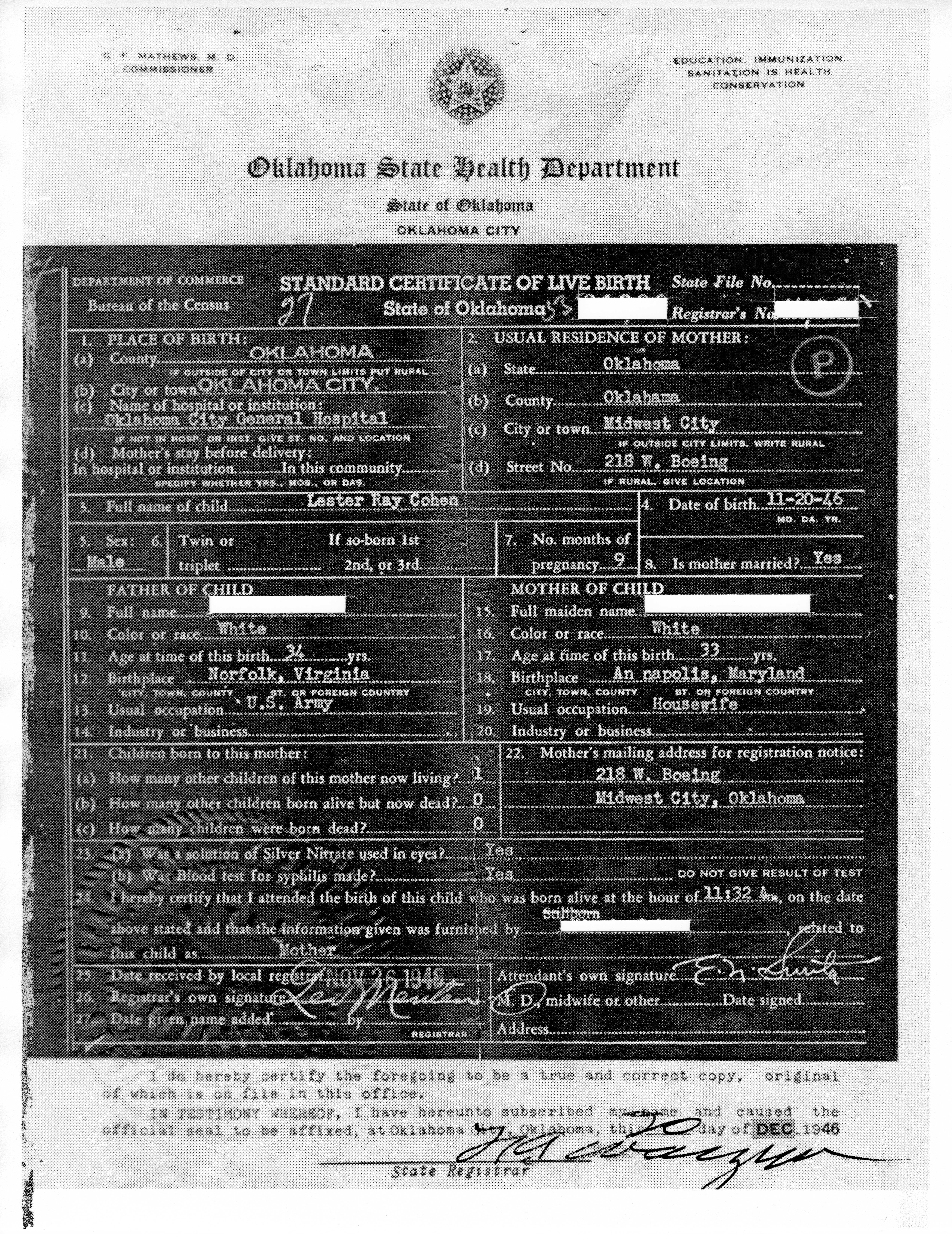
Except for a few details, this is a true accounting
of actual events as told to the WordFeeder by one of the principals
in the story you are about to read. The embedded birth certificate has
been redacted to protect the identity of one of the principals
and his family, but is nonetheless real.

“So did ja read it yet?” It was Stallings habit to come into his colleague’s office without knocking, and tonight was no exception. Knocking conveyed a certain respect that might suggest that he and you were equal, and that wasn’t something he would ever concede.

“Read what?” Penelope responded, not bothering to look up. Looking up would let her intruder conclude that he could command her attention which he could, but only if she let him.

There’s was a world in which everything counted.

They had slept together… Wait. No, that’s too romantic a way to put it. More like they had sex together once over a year ago. Her team had been going nonstop, around the clock on a special project. No sleep. Lots of pizza. They both needed a break and took it on her couch. Twenty minutes later, they were back to work.

“This,” he told her, throwing a classified file on her desk, causing the two short piles she had in front of her to mush together as it landed, covering up the form she was filling out when he’d walked in.

“Hey!! You think maybe you shouldn’t piss off the superior who writes your evaluations?!” Her voice was calm enough, but she wasn’t kidding… and he knew it. “What is this?” she asked, still not looking at him, turning in her chair to put her shoeless feet, crossed at her ankles, on the corner of her desk she kept clear for just that reason.

“An entry level NSA researcher picked it up off some guy’s family blog when it tested positive for the query we sent them.”

“Remind me…”

“The one that looks for references to suspect births, 1940 to 1950, that meet the profile our psycho-bananas consultant gave us.

“You know, I’ve never seen him without his lab coat.” It was rhetorical observation not meant to solicit a response, her eyes skimming the disclaimer on the cover sheet, paying special attention to the signatures of those who had seen it recently. “Where was this one?”

“Oklahoma. 1946. It was part of a memoir written by his mother when she was gravely ill, about a time when she was a delivery nurse, just after the war. Take a look. I’ll get us some coffee.” And he left.

Opening the folder, it seemed for a moment that she couldn’t move her eyes off the title, but she did and read the copy of the handwritten text the blogger had published. His mother was from an age before computers, and had never learned to type. Her penmanship was steady, deliberate and easy to read despite the woman’s advanced age and condition.

Oklahoma City, November 20, 1946, just after 10 AM.

It had been a slow shift since I had come on at 8 when it was still cool enough that the air flowing from the open double doors at the end of the corridor near the maternity ward made the place bearable. Later on that day, not even the large floor fans we had would keep me and the other staff from perspiring through the starched white outfits which were required wearing at the time. I remember that day because it was unseasonably hot, but mostly because of the one military couple that came in from Tinker Field whose delivery made me question what I believed and, more importantly, what I didn’t. You know, son, I’ve never been a particularly religious person. Looking back now that I face the end of me, this is the one event in all the years that makes me question whether or not I might have missed something.

They were in their early thirties. He was a Captain in new Air Force they created after the war. With nothing more than a simple infirmary on the base, he had taken the chance to drive his wife to our hospital, fearing that, if it was a problem delivery, the corpsmen at Tinker wouldn’t be able to handle it. It was a risky decision given her condition and the distance, but these were determined people. The mother, in particular, was going to have her child, regardless of the cost. What irony that the Captain had survived three years in the war unscathed, only to come back to have his wife’s life threatened by something so routine as the birth of their second child.

She was a slight woman, barely 5 feet tall, weighing just 100 pounds before she had become pregnant. Labor had actually started more than a day earlier, slowly, with its intensity and the timing of contractions coming and going unevenly. When she arrived, we found her in agony, writhing in pain. The child, still inside her, was huge relative to her size, and was cavorting, turning and rolling, fighting to get out. Nowadays, they would have done a Cesarean, but not then. For whatever reasons, the doctor agreed to a vaginal birth.

As was the habit at that time, the Captain stayed in the waiting room while his wife fought alone, with the doctor, me and another nurse, to push out her son. After what wasn’t more than 20 minutes, the wife began to deteriorate, the medications we had given her having done little to resolve the difficult situation in which she and her baby found themselves. Even without the monitors and other technology we have now, it was clear they were both in serious trouble. Sending the other nurse for a second doctor to assist him if necessary, the attending went into the waiting room, just outside, to speak to the Captain.

So quickly had the doctor been moving that the swinging door to the delivery room had become stuck open, and I could see the Captain rising to his feet. Fearing the loss of the baby, or the mother, or both, the doctor asked the Captain, if it were it necessary to make the choice, should he save his wife or child. It was a question he had to ask, given the religious beliefs of some of our patients, but these were Jewish people and I’m not sure it was a problem for them. I remember the Captain looking past the doctor, into the delivery room, the full weight of what he would say clear on his face. “You save my wife, doctor,” he said without the least uncertainty in his voice, turning his head to face the physician to make sure his decision was clear. “Save my wife.” (I remember wondering later if I would ever hear a more profound statement of love given what he stood to lose. Whatever his beliefs, they served him well.) His voice was resolute, its sound hanging in the warm air while his eyes followed the doctor who rushed back into the delivery room, the second doctor and the other nurse almost running down the hall right behind him.

Half an hour later, it was over. The lifeless body of their son lay unceremoniously on bloody towels in a tray on a table along the far wall while we continued to help the mother. The other nurse, so affected by the loss of the child, left to start the paperwork, so she said, but no one could blame her, and I did my job trying not to look up and across the room.

It was then, son, a full five, maybe 10 minutes after the delivery, that I heard… no felt is more like it, the sound of a hand reaching into my head, as if to pull my mind toward it. I felt panic and fear, not that I had felt before, but what I realize now was the dread and sadness of pending death. I felt life slipping away uncontrollably – I cannot, even today, explain the power of this calling, the memory of which time has done nothing but enhance. – and found myself drawn away from the wife, semi-conscious on the delivery table, to the baby, still motionless where the doctor had laid him to rest.

What I did next was by compulsion, by the instructions of an unseen intelligence, something so primal and yet so compelling, I had no choice. Picking up the child, still wet from the delivery, I shook it violently, back and forth in front of me, and then I stopped. The doctors were no doubt alarmed, but I wasn’t paying attention, not to them, still holding the body of the baby a foot in front of me. And then, as if nothing had happened, his head shook back and forth on its own, his eyes, never cleaned after birth, opened, and his color began to normalize, his legs and arms beginning to move normally. And the fist in my head went away as suddenly as it had arrived.

I was surprised, pleasantly so, to find out years later that the child had not only survived, but appeared to be normal in all respects and, in fact, quite intelligent. You had to have been there, son. Far from thinking these to be the ravings of a sick old woman, it was, as you’re fond of saying, an experience you can take to the bank. I’ve seen an old photostat of his birth certificate, the word “stillborn” typed in, then crossed out. (I’ve enclosed that copy for you to see. Take good care of it.) Make what you want of what I have told you, but it was real and says something, although I don’t know what, about the human condition and about a certain power we may all have within us.

“Well,” Stallings asked on his way back into her office, the frosted glass door to her office still closing behind him. “What do you think?”

“I think it’s a curious story, that we should get a copy of the birth certificate and see where it takes us, but that Beaker,” her pet name for their scientist consultant, “has his pocket protector up his ass.”

“Here,” he said, reaching across her desk to hand her the coffee he promised, the sound of his voice muffled by the oversized bite of the cinnamon bun he was holding. “Want some?”

“What, after you’ve had your mouth on it?”

“That didn’t used to bother you.”

“Jeeze, you’re so repulsive sometimes,” she spoke honestly and quickly which was always her style. “What about the birth certificate?” She didn’t have time for his nonsense.

“Gone. Missing. The son never got it, and the original’s long gone.”

“Okay, trace the kid through his father’s military record. There couldn’t have been that many Jewish Captains at Tinker Field on that day in November. And do it yourself,” meaning, as Stallings knew she did, that he should keep it to himself, entirely on computer if possible, without hinting at the importance of any inquiries he’d have to make.

“I’ll take care of it. …You don’t buy this theory about near death birth experiences, do you?” Stallings asked a serious question, trying to get back into her good graces by focusing on the task at hand.

“Beaker says that there’s a kernel of intelligence, a core life force in our brains that is the last thing of us to die, that cries out at the end in one last desperate attempt to get help. That I’m willing to buy, but can a near death event ignite something, some special capability in an infant? Can that child grow up, perfecting its ability to reach out to other minds, to become our mission’s target?”

“The one that comes and goes, and can never be killed?” Stallings recited the popular legend. “The one with telepathic powers and who can move things with his mind?”

“Yeh, that one. Telepathy, maybe, using very low power bio-chemically produced electromagnetic waves, having perfected his ability to control and interpret their frequencies. Maybe. Telekinesis, on the other hand would require substantial forces way beyond what any human can produce outside the SyFy channel.” Clearly annoyed by it all, she was busy reorganizing the papers on her desk. “I think it’s an agency myth and that we’re wasting my team’s time and money. Now get the fuck out of here and do your job.”

Standing up from the chair in the front of her desk, taking one last look at the front of the sleeveless t-shirt was wearing – because he was a creep and couldn’t help himself – he turned toward the door only to be surprised by the man, in his early 60s, standing inside Penelope’s office just a few feet in front of him. “Who.. When did you…,” and his mind went blank, his body, limp but still standing.

“Wait over there,” the man said pointing to the open space on the wall next to the bookcases. And that’s exactly what Stallings did, hugging the wall, his shoulders down as if he had been shamed by his third grade teacher, Mrs. Cronmiller, and told to stand in the corner.

“Hi, honey.”

“Hey, Dad.” By the smile on her face and way her eyes opened, it was clear she was glad to see him, although they talked frequently, even if there was no phone or e-mail involved. Even now, just in case someone was listening, everything he said and she asked or answered was in their heads, mind to mind. A sort of dampening field he radiated allowed him to move unnoticed by those who would see him. Her agency records said she had been adopted by a wonderful couple, now diseased, but made no mention of the man being her biological father.

“Is bozo going to be a problem?” he needed to know, for his own safety and hers as well.

“No. He won’t remember any of this, just what I want him to recall, and he won’t follow up. Besides, I’ve already fixed Grand Daddy’s military records.”

“Thanks, honey. Anything you need me to look into for you?”

“A couple of things. Why don’t you buy me dinner at that roadhouse you love, where the band is too loud for anyone to hear us, and we’ll talk about it?”

And he smiled back, knowing it would, as always, be the highlight of his day. Looking at Stallings, still standing there in the corner, he turned and opened the door, sending Agent Bozo through it and back to his office without his suspecting or remembering a thing.

-wf

What to read more? Just click here and pick a title you like.

Copyright as of the title date or earlier, by me.
(I write the WordFeeder blog.)  All rights reserved.
Email WordFeeder@verizon.net for additional information.

Memo to Carolyn

Short Fiction for Guests of the WordFeeder
Wednesday, March 18, 2009
Printable version… Memo to Carolyn PDF

Metamorphosis. In Biology, a profound change in form from one stage to the next in the life history of an organism.

Except for a few details, this is a true story.

The doorbell rang unexpectedly that unseasonably cool, gray Sunday morning. “I’ll get it,” she said to Jack who was busy looking through the Best Buy flier in the morning paper he’d brought back from the store down at the corner. Walking from the kitchen to answer it, past the boxes she and her husband had yet to unpack, Carolyn looked though their bay window, wishing it would start raining already and get it over with. She was numb, having been unable to sleep the night before.

“Yes,” was all she could manage to say as she opened their front door to see a woman in her thirties and a curly haired boy, maybe seven or eight, whose hand she was holding. In the boy’s other hand were one or two sheets of paper, neatly folded in half with something printed in pencil Carolyn couldn’t make out. He lifted them up, extending his arm, his eyes asking Carolyn to take them as his mother began to speak.

“Are you ‘Carolyn’? the mother asked nervously.

“Yes,” Carolyn responded tentatively, turning her eyes downward to the boy smiling up at her. “What can I do…”

“I… You don’t know us. I live in Collier, about half an hour from here. My son, Jeff,” the mother started to explain, squeezing her son’s hand as she did, “is very bright. Good computer skills. This morning he was up early on his computer, typing. His hands are a little small, but he types real well anyway. Doesn’t have to look at the keys.” A sense of pride came through her anxiousness as she continued. “This here is what he gave my husband and me when he came in for breakfast. It’s typed, as you’ll see. That’s Jeff’s printing with your name and address there on the outside.”

Kneeling down in the open doorway, Carolyn extended her hand to take the pages from the little boy, his big brown eyes giving momentary relief from the sadness she had been fighting. “Hi, Jeff. Is that for me?”

“Yep,” he said, handing it over.

Unfolding it, she saw a page and a half of very neatly typed paragraphs. “Did you type this for me?”

“Yep,” he said again, nodding his head up and down this time. “I’m in the third grade.”

“How did you know my name and address? My husband and I,” Carolyn looked up at the mother to make this point,” haven’t even finished moving in yet.”

“Don’t know,” he smiled back at her, and her back at him. “It was just there.”

“Where’s that?”

“In my head, with the words I typed.”

“How ‘bout that.” Carolyn didn’t know whether or not to believe him, but, “What the heck,” she thought to herself, standing back up. “Well, thank you. Thank you both. I’ll read it while I’m finishing my bagel.” She didn’t know what else to say, forgetting even to ask how to contact them if she had any questions.

And the mother turned, walked down the stoop, her son in tow, when Jeff stopped, turned and said, “I’m sorry.”

“Sorry about what?” Carolyn asked him, still standing in the doorway.

“About your dad,” and then he turned and the two of them walked back to their car.

She was stunned. The almost surreal experience of these two strangers coming to the door, now replaced in her heart with the memory of being at the hospital the night before, realizing that her father had passed away just before she could get there.

Sitting down again, she read the note out loud to herself and Jack, who looked up at the expression on his wife’s face and listened quietly to the slight trembling in her usually steady voice.

Hi, Honey.

I don’t believe in God. You know that. We’ve talked about it from time to time. Just because there’s something, many things we don’t understand, doesn’t mean a deity had anything to do with them. It just means we haven’t figured them out yet. I believe in science. Still do, even now. And I most certainly don’t believe in ghosts. “Dead is dead,” I used to think to myself. Sad, but true. We are nothing more than complex biological machines, the imperfect product of eons of evolution, born to die.

These last few months, sitting on the deck, watching the birds and squirrels, I’ve been thinking about what makes us different from them. Many things, of course, but the one that struck me as most important is imagination. They know we exist, that we’re some kind of living thing, but they can’t imagine, can’t conceive of what we are.

And so it occurred me, albeit a self-serving realization in light of my current “predicament,” that perhaps we, too, suffer from the same shortcoming, overwhelmed as we are by the conceit and over-confidence that come naturally to any highly intelligent species.

Unlike my birds and furry friends on the deck and in the woods behind our house, we can pretty much imagine anything. It’s the stuff of science fiction, proof positive that we can conceive of things well beyond our ability to comprehend how they might be possible. Imagination is the leading edge of discovery. More and more, as our technology and knowledge advances, it becomes clear that imagining something is the precursor to figuring it out, to finding it, to making it happen. It’s not something the bird and the squirrel can do – although I wonder about the squirrels sometimes, the way they pause to figure out how to breach the “squirrel-proof” fence around the birdfeeder. They’re thinking, and there is great promise in that.

What if our recent success over the past few thousand years had made us arrogant? What if we’re not the most sophisticated, most intelligent life form on the planet? In the universe, of course we’ll concede that there must be other, superior life, but that’s a purely academic observation we lose nothing by making. Here, on earth, it’s all about us. We are the superior beings. Even more demeaning, what if we were only a stage in a process so surprising, so different from our experience, that it is, to us, a thousand times more profound than the difference between the bird and squirrel and me?

Is it possible – and the fact that I can imagine it may make it so – that exobiological intelligent life – intelligent life without discernable form, the ultimate wireless entity – exists here, and that all we are, physically, is a cocoon, larva, an interim step in the development of something else, the existence of which is nothing like human, the presence of which we cannot sense? How presumptuous of us to believe that life must have form, or that that form must be something we can see. There was, after all, a time not long ago, before microscopes, when we believed the only life there was was what we could see with the naked eye. Just because you can’t see or touch something doesn’t mean it doesn’t exist, but only that, whatever it is, you can’t see or touch it.

I’ve always scoffed at stories about ghosts, about communicating with the dead, out of body near death experiences, and reincarnation, about whether or not there’s any substance to the notion of a “soul.” No doubt, they’re mostly bunk, the product of confused minds and charlatans who would profit from the need many of us feel for something more. On the other hand, maybe, just maybe there’s a simpler, explanation. Maybe it’s just that there’s another life form right here on Planet Earth, the distant relative we never knew we had to whom science will someday introduce us. What I propose, it’s just occurred to me, is nothing less than a unified theory, a single explanation for all the spiritual mumbo jumbo. “ Boo!” …Sorry, I couldn’t help myself. That used to scare you when I would read to you when you were a little kid. Scare you, and then you’d laugh – but don’t think from that poor excuse for comic relief that I’m not serious – or that the circumstances of your receiving these notes should be easily dismissed. (Sorry I missed you last night, but don’t feel bad. I know you came as soon as you heard.)

Could it be that death is not the end, period, but only a milestone? That the next stage needs time to develop the intellectual power and experience to be self-sustaining in its final form? Is it possible that we fight so hard to live, not because we believe there’s nothing more to it, nothing beyond our current existence, but as an instinctive mechanism to protect the life form we are nurturing? …a life form our science will one day be able to confirm and explain? What today is unbelievable, becomes tomorrow’s common knowlege in the science textbooks of high school and college.

Honey, I’m not talking God here. Heaven forbid. Nor am I waxing philosophical about souls or spirits. I’m just wondering if there might be a form of life, from us, but not like us, into which we might, each of us individually, be evolving.

Well, it’s all so much crap, isn’t it? After all, no one ever dies to tell about it. One thing’s for sure, if you’re reading this, the words, “I will always be here for you,” will now mean more than you would have otherwise imagined. As for the voice you’ll hear in your head every now and then, the one you think sounds like me, maybe it will be.

I love you.

Daddy

There was a moment of silence around the table, Carolyn staring at the word “Daddy” while Jack’s eyes moved around the table, his head fixed and face emotionless, settling on the open and now empty plastic tub from Trader Joe’s.

“We’re out of cream cheese.”

Not bothering to look up at him, she drew a shallow breath and set the neatly typed pages she was holding down to her right, on top of the folded style section she’d been reading before the doorbell rang. Her left elbow on the edge of the table, she massaged her forehead with the thumb and fingers of that hand. And then, pulling her lips apart slowly, closing them, and trying again, “Put it on the list,” she said instinctively, “…I’ll, uh,” forgetting for a moment what she was supposed to say, “I’ll be going shopping later today.”

-wf

What to read more? Just click here and pick a title you like.

Copyright as of the title date or earlier, by me.
(I write the WordFeeder blog.)  All rights reserved.
Email WordFeeder@verizon.net for additional information.

“Dream a little dream of me.”*

Short fiction for guests of the WordFeeder.
Saturday, November 8, 2008
Printable version… Dream a Little Dream of Me PDF

“Bobby?” As tiny as their apartment was, there were times when they couldn’t see each other. “Bobby, where are you?!” She shouted, struggling with one hand to dump their bedroom trashcan into the big garage bag she was holding in her other, and do it in the less than 18” they had between that one side of their bed and the wall with the window to the fire escape.

“Hi, Dorothy.” It was the shrill, instant headache, unforgivingly cheerful voice of her neighbor, the older lady that lived on her same floor but in the building that backed up against theirs.

“Hi, Mrs. Donnelly,” she answered reluctantly, pausing a second to look over rather than feeling bad the rest of the night for having ignored her. “How,” she thought to herself, “could someone that nice be so annoying?” “It’s cold out,” she said out loud this time, “shouldn’t you be closing your window?”

“You’ve got yours open” She was annoying, but not stupid.

“You’re right, Mrs. Donnelly. What was I thinking? ..Good night now,” and she reached up to pull the lower half of the window down, turning the lock and waving goodbye with a quick back and forth motion of her hand. “ … Bobby!”

“What?!” came the muffled, frustrated voice of her husband from behind the pocket door at the end of their kitchen, “I’m in the bathroom. Give me a break.”

“I’m taking the trash out.”

“Fine, fine, fine,” he responded with almost, but not quite complete disinterest, followed by the sounds of his turning the page and then refolding the front section of that morning’s Times he was just getting around to reading.

“Ummmh.” She was strong for being only five foot three, but the old metal door to their apartment, made heavier by more than a hundred years of sloppy paint, always took her best effort. Somehow the grunt seemed to help. “I’ll be right back,” she mumbled, not wanting to make herself heard over the banging shut of the door behind her. Instinctively, she patted the right front pocket of her jeans to make sure she had her key, the garbage bag she was carrying brushing up against the plaster wall of their narrow hallway.

Five flights down and around the marble steps of the converted tenement where they lived, past the building mail box, and she was almost at the door to the side alley. Outside there was a platform and two steps down to where the trash cans and, yes, an occasional rat would be waiting. But these were good, West Village rats, bohemian and more friendly than most in the city, so she liked to think, that fortunately she had never had the pleasure of meeting.

She took out the garbage every night after dinner, but tonight would be different. Tonight, coming around the corner past the mailboxes, in the dim light from the high ceiling above her, there on the small dirty white tiles just ahead of where she was walking, there was something dark on the floor. Letting the bag she was holding in her left hand down slowly, she bent over, not wanting to kneel down. Leaning forward, it was… it was.. “Blood?” she whispered calmly, at first, until the almost academic nature of her investigation was interrupted by the “chunk” of the door a few feet in front of her.

“Oh, my God!” she whispered nervously. “There must have been someone there,” she thought to herself. And then something else caught her attention. To her right, on the wall, she extended her own hand as if to touch the red print, smeared as if someone had pressed their hand against the wall on their way down to the floor. Turning her hand slowly to see her palm, a wave of fear unlike anything she had ever imagined finally hit her.

“BOBBEEE!!!!” Dorothy turned to run up the five flights back to her apartment. “BOBBEEEE!!” she kept shouting, running as fast as she could…

“What?! What’s wrong,” he rolled and sat up on his side of their bed. “What is it?” But then he knew, seeing her sitting up, staring at the palm of her right hand, her face contorted with fear, her chest heaving as it fought to catch the breath she didn’t really need to take. “Com’on,” he said, reaching around and pulling her toward him. “It’s just a dream, the same dream you keep having. …It’s not real. It’s not real, honey.”

It took what seemed to be forever, but she finally calmed down and fell back to sleep in his arms lying there, her head against his chest, his arm still around her.

——————————

“Mr. Cooper? …Mr. Cooper?”

“Yes, Doctor. Sorry, I…”

“It’s okay. You’ve been here with her for two days now. I’m sorry I had wake you, but I’m getting out of here for the night and didn’t want to leave without giving you an update.”

“So how’s she doing, Doctor?” Bobby asked, getting up from the chair by the window where he had finally fallen asleep, exhausted to the point of shaking when he talked. “Why isn’t she conscious yet? Shouldn’t she…”

“Hold on. I think she’s going to be okay. Actually, physically, she appears to be recovering well from the surgery.”

“Then why isn’t she…”

“Bobby, listen to me,” he responded, doing his best to calm Bobby down. “Think about it… She goes down to take out the trash, like she does every night, but this time she interrupts some spaced out druggy who’d apparently come in, the Police aren’t sure why, panics and shoots her. That kind of trauma does things to your head. If one of your neighbors hadn’t stopped by for his mail, she could have died, could have bled to death, but she didn’t. She’s going to be okay. This tossing you see, this squinting and anxiety you see in her face… She’s fighting on one hand to wake up, but on the other to stay under, to make it a dream, to fight the reality of what’s happened to her.”

“When do you…”

“I don’t know, Bobby. You sit by the bed like you’ve been doing. Hold her hand. Talk to her. Most of all, let her hear your voice. …You’ll both be okay.”

-wf

*From the lyrics by Gus Kahn.

What to read more? Just click here and pick a title you like.

Copyright as of the title date or earlier, by me.
(I write the WordFeeder blog.)  All rights reserved.
Email WordFeeder@verizon.net for additional information.

Mind Over Maury

How I learned to stop complaining, and love ESPN.

Short fiction for guests of The WordFeeder.
Sunday, October 5, 2008
Printable version… Mind Over Maury PDF

“Hey, Sue.” It was Saturday morning, around 11. Maury was just coming back from Lowe’s with a half a dozen or so plastic bags filled with what he needed for the weekend’s projects around the house.

Sue had been friends with his wife, Doris, since college, a bridesmaid at their wedding 22 years ago. This morning, she had walked the few blocks from her house in their suburb to visit. The weather was perfect this morning early in the fall, cool, but not so much that they couldn’t have their coffee around the small table on the porch that wrapped around the front of Maury’s house. He was a little overweight, but still the same pleasantly good looking guy Doris has married, quick to smile, slow to get angry, devoted and attentive to his wife and children, especially lately.

“Hi, Maury,” Sue smiled back at him, sitting sideways, one leg tucked under the other on the cushion one of their wicker chairs, warming her hands around the fresh cup Doris had been pouring for her as he walked up the path from their driveway.

“Hi, honey,” Doris put the coffee pot back on the table, and was slouching back into her chair, crossing her feet on their way back to the ottoman in front of her. “What you got there?”

“Everything I need to clear up the last few items on your list,” he responded without the slightest trace of sarcasm. “Am I the perfect husband or what?” The truth is, he was, at least recently, including in the bed department to Doris’ pleasant surprise, and in every other respect.

“…or what,” she responded warmly, kidding him with her smile. “You need help?” Doris started to get up, watching Maury struggle to hold the screen door open with his left foot while opening the front door with his right hand, the bags he was holding now dangling from his risk.

“No, no. I’m fine.” And so she stayed where he was, waiting until she heard their door chunk shut before resuming her conversation with Sue.

“Wow,” Sue couldn’t help but notice, “what’s happened to him? I didn’t think Maury did stuff around the house, or anywhere for that matter…”

“…particularly,” Doris finished Sue’s sentence for her, “since he got that widescreen and added all those ESPN hi-def channels to our cable service.”

“So what did you do,” Sue asked her, pretending to suggest with her twice raised eye brows that it might have been something sexual, “to get his ass off the couch in your family room? …Something maybe I can do for Bob?”

Laughing as she sipped on her favorite, oversized coffee cup, Doris couldn’t wait to share her secret. “No, nothing like that, sad to say. It was, uh… Well, actually, I was going to the bathroom a few weeks ago, hiding out from the kids, fuming at Maury for ignoring them and me to watch some college game he couldn’t care less about.” Doris stopped for a moment, sat up and leaned forward toward Sue to talk to her more quietly, face to face. “So I’m sitting there fumbling through the stack of magazines in the basket, and I come across one of Maury’s Poplular Sciences from a few months ago. I figure, what the hell, I’m tired of reading catalogs anyway…”

“I know, there’s nothing in any of them worth buying anyway, and the models are beginning to look like children. Just pisses me off.”

“My point exactly, so I pick it up and start thumbing through the pages. It’s sort of interesting, but I was just killing time until I get to back where they have all these little classified ads, everything from Viagra to kits for making personal helicopters, stuff like that, and then this one little ad catches my eye.” She paused for dramatic effect, playing with her friend, taking a moment’s break for a gulp of coffee.

“Com’on, already,” Sue demanded, having fun being excited, “What was it?”

“It was this little ad for something called ‘Mindset,’ you know like a TV set gadget for your head. ‘Changing the way people think.’ was all it said, and a website. …I don’t know. It stuck in my mind for the rest of the afternoon so, what the hell, I went there.”

“So what’s it do?”

“It’s what they call a ‘smart card,’ like a credit card, but it’s programmable, that goes into a slot on the back of your cable box. Take a look. I didn’t even know there was one.”

“One what?”

“A slot, for the card, in the back of your cable box.”

“And what’s any of this have to do with Maury?”

“Listen, it’s simple.” Doris paused as if to give Sue time to write down what she was about to say. “…You put the smart card in your laptop, and run the software which lets you program one or more messages, just a few words, that the card will play every once and a while, every so many frames. It happens so fast, the person watching doesn’t know – and you can program it to run on only certain channels…”

“Like ESPN!” they sat back and said simultaneously, nodding their heads slightly up and down.

“It’s what they call,” Sue recognized the process from some book on marketing and psychology she’d read once, “subliminal advertising, isn’t it?” Doris smiled back at her in agreement. “… ‘subliminal’ because it affects the subconscious without the person watching knowing it. They tried an experiment once in movie theaters to see if they could get people to eat more Coke or pop corn. Apparently it worked so well, they made it illegal. …Isn’t it illegal?”

“Well, yes and no,” Doris was hedging. “The manual that came with it said it was illegal to use on other people without their knowing it, but…”

“Honey…” It was Maury, surprising them at the front door to ask a quick question. “Where did you put the shade you bought for our bathroom window?”

“It’s around the corner, in the bag leaning up against the coat stand.”

“Great. Sorry to interrupt.” And he was gone, the front door chunking behind him again.

“…According to the manual, it’s meant for personal use, you know, for people who want to stop smoking or suppress their appetite for snacking while they watch TV. …But I figured, why not give it shot.”

“And you programmed it to tell Maury what?”

“A couple of things. That I was amazing, and that he should do whatever I asked him to do, and love doing it.” She stopped to chug the last few drops in her cup. “…It took a week or so, but then it started to work, and just keeps getting better.”

“Unbelievable,” and then Sue laughed, almost squealing with excitement, “and I want one!!”

“Com’on. Let’s get out of here,” Doris checked her watch and stood up. I’ll get my pocketbook and keys. They’re right inside on the hook.” Pushing open the front door, she reached to her right to get what she needed, “Maury!” she shouted to him. “Sue and I are going to get some lunch and catch the 2 o’clock show. See you later.”

“Have a good time,” he shouted back to her. “I’ll be done with all this before you get back.” And she turned, pulling the heavy wooden door behind her, leaving it for the screen door to take care of itself.

An hour or so later, Maury’s buddy Jake wrapped on the sliding glass door to their walkout basement. Peering over his shoulder from couch in front of the widescreen TV, he waved to his friend to come inside – huge, almost life size football players running across the wall of plasma behind him. “Grab a beer, this is getting good,” which Jake did, plopping himself down in the overstuffed chair where he always sat, reaching over the arm of the couch to grab a handful of popcorn, dropping on a few kernels on the way to his mouth.

“Where’s Doris?” Jake asked without looking at his friend, his eyes fixed on the action in front of him.

“Out for the afternoon with Sue.”

“Does she know?”

“No. Never should have asked me to clean up the basement. Wouldn’t have found it if I hadn’t been vacuuming behind the cable box.”

“Can’t blame her.” Jake understood from his own wife’s constant complaining.

“Nah.”

“So you’ve reprogrammed it?”

Smiling, Maury took a rare moment to turn away from the screen. “Let just say I wouldn’t watch Oprah down here if I were you, …and the sex has never been better.”

-wf

What to read more? Just click here and pick a title you like.

Copyright as of the title date or earlier, by me.
(I write the WordFeeder blog.)  All rights reserved.
Email WordFeeder@verizon.net for additional information.

Finding Dana

Short Fiction for Guests of the WordFeeder
Tuesday, August 19, 2008
Printable version… Finding Dana PDF

October 4, 1966.

“Jeff?”

For a moment, sitting there in the twilight of their bedroom, he thought he heard someone calling his name from whatever was playing on the TV that Dana insisted had to be on all night. He turned to look, wondering for the moment at how surreal the flat screen seemed on the wall behind him, like a painting come to life, not at all what he expected. Slowly, he turned back to stare at her face, barely illuminated by the soft light coming from their lamppost through the blinds. It was the middle of the night, 3:48 AM to be precise, according to the glowing numbers on the radio across the bed, on the nightstand next to the side where he’d been sleeping.

He was up, but tired. He never did need much sleep, but lately, now in his early sixties, getting up in the middle of the night had become routine. Sometimes, he’d go downstairs to do the dishes leftover from a late dinner the night before, or write pieces that no one would ever read. Writing was the passion that practical choices and the circumstances of life had denied him, but not so that it made any difference. Finding Dana made whatever he hadn’t accomplished seem unimportant.

He would stay down until he was tired, so his restlessness wouldn’t disturb her, and then go back to lay beside her, tucking his hand under her side to help him fall asleep.

Tonight he sat on the edge of her side of the bed watching her face – ever so slightly older, but then even more beautiful than the evening he’d first seen it. What he saw was as new as it was familiar. If anything could be both at the same time, it was Dana. She was the girl, now woman he’d love to meet, and yet somehow had always known. Forty years together and still he couldn’t take his eyes off her, but instead of love which was obvious, what he felt was sadness and fear. The night seemed like such a waste of time, given how relatively little they had left. What, maybe 20 years if they were lucky, if he could live that long? A long time when you’re twenty, when there’s more after that, but no time at all when there isn’t.

It was a ridiculous…

“Hey, Jeff?” He heard it again, now with the sound of other voices and music in the background.

Whatever it was, he’d ignore it.

…a ridiculous question, the kind only an over-active mind would consider. On one hand, he wanted to go first, to never have to live without her. On the other… On the other, he loved her too much not to be there for her until the end.

“Hey, buddy,” his friend, Howie, was standing next to the booth Jeff had been holding for them, seeming unusually short, an anxious waiter holding a tray over her head while his friends blocked the narrow aisle. Pushing on Jeff’s shoulder, he tried again, “Jeffrey, honey? I really need you to…”

“Yeh. Hi. Hi. ..Sorry, I was just… Actually, I’m not sure what I was thinking about.” Looking up, his eyes blew past his chubby friend, past “Bunny,” the girl he’d been dating, to her friend with the green eyes, short blond hair and instantly familiar smile.

He stood up carefully, worried he’d forget that the booths were one step up. He’d made a mental note not to make a fool of himself when he first got there and asked the girl at the door if he could hold the table for his friends. “The Pub,” which was all the simple sign over the door said, was one of those places every college town has, right off campus, where bad cheeseburgers on Kaiser rolls and fat steak fries couldn’t have tasted better.

“Hi,” he smiled back at her, extending his hand. It was too proper, close to weird, he knew that, but he had to be sure. “I’m Jeff,” he told her, as if she didn’t already know.

“Jeff,” Howie decided he needed to make a formal introduction. “This is Dana. Dana, this is Jeff.” For some reason it made her giggle.

He was still holding her hand, but finally let go on the way to inviting her to sit next to him on his side of the booth. Howie and Bunny squeezed in across from them. The table, he thought, was too wide, too far across for them to talk.

Turning to his left to face her, while Howie passed out their badly typed menus in plastic folders, he said it again. “Hi.”

“You already said that,” she answered, leaving him to wonder if she punctuated every sentence with that same smile.

“Yeh, uhhh… We need to go out.”

“We are out.”

“I mean on a date?”

“This isn’t a date?”

“I meant, without Howie, Bunny, or any other animals.”

“Don’t you want to see how tonight goes?” she asked, knowing already how it was going to turn out.

“No, no. I mean, I already know we’re going out again.”

“You do?”

“ I just wanted to get the award moment after I walk you back to the dorm out of the way now… so I can spend more time kissing you goodnight.”

Suddenly, Howie and “The Rabbit” as he sometimes referred to her in private, stopped over-talking each other and were staring across the table, their eyes moving from one of their friends to the other.

Pausing for a moment, Dana leaned forward, planting a gentle, perfectly long-lasting kiss on his lips, a little bubble popping as she broke away. It felt like a week before he opened his eyes, but she waited before saying anything. “There. Now that that’s out of the way, maybe you can buy me something to eat.”

-wf

What to read more? Just click here and pick a title you like.

Copyright as of the title date or earlier, by me.
(I write the WordFeeder blog.)  All rights reserved.
Email WordFeeder@verizon.net for additional information.

Self-Fulfilling Prophecy

Short Fiction for Guests of the WordFeeder
Thursday, August 7, 2008                                   
Printable version… Self-Fulfilling Prophecy PDF

Had there been anyone there to tell the story, it would have seemed to take forever for the glass to tumble from the edge of the desk to the floor which was no longer where it used to be, losing its few leftover drops of last night’s wine along the way to oblivion.

The sound began like rolling thunder, slightly off key, building, not gradually enough, to a deafening crescendo no one would be there to hear, a perverse celebration of something someone had anticipated long ago, perhaps no more than a lucky guess, or maybe a quirk of time and space Einstein’s disciples would one day figure out.  It was the birthday of a legend – fodder for endless speculation and mind-numbing over-coverage by the network and cable news.

Twenty minutes earlier…

It was a postcard morning, as it had been every day since they arrived in Nassau to celebrate their fifth anniversary.  The view out their eighth floor ocean suite might as well have been painted on the glass.  The door to the balcony had been open all night, the breezes that were everywhere on Paradise Island pulling the sheer curtain outward, like the flowing white dress of some unseen spirit that had come to watch over them.  Below, on the beach by the cove for which the hotel was named, the morning sun reflected off the water coloring the white under-feathers of the sea birds an iridescent turquoise that seemed unreal.

Well-rested, they were up early, anxious to get their cabana chairs in the perfect position for a long day of reading, writing, talking about everything and nothing in particular.  Now and then, when it was too hot, they cool themselves with walks in the warm ocean water, and virgin banana daiquiris artfully prepared by one of the always friendly locals at the nearest beach bar.  Their first five years had blown by.  This week at the Atlantis complex was just the long overdue break they needed.

Atlantis was on Paradise Island, separated by only Nassau harbor from New Providence Island in the Bahamas, a billion dollar resort with hotels, beaches, elaborate pools and water activities, all built around the theme of its namesake, the legend of Atlantis, complete with Hollywood’s best quality ruins of the great city that once disappeared beneath the sea.  Andy and Carolyn were staying in the more exclusive, more adult, less Disney section of the resort – the hotel with the two story lobby with no walls, the Mesa Grill, and cushioned islands in the middle of the pool to which waiters waded out to bring you drinks made from rum and fresh fruit.  They planned to eat at the Grill tonight, either that or go out for conch fritters and shrimp at “Bad News Jack” in the city.  They figured they were young, and their colons could take it.

“Honey,” Carolyn was too busy packing her beach bag to see what it was all about, “you’re getting an e-mail from Amanda,” his younger sister.

“I was wondering why we hadn’t heard from her.”  Missing a birthday or anniversary wasn’t like Amanda.  She was a professor of ancient history at Columbia, and had taken the summer off to do research in Athens on the history of some of the ancient writers.  Andy sat down, double clicked, and began reading to himself.

“What’s she have to say?” Carolyn shouted past the open double doors to the bathroom, squeezing herself into the bathing suit she had optimistically purchased one size too small just for their vacation.

“I don’t know.  She seems anxious.  Doesn’t even mention our anniv…   Wait a minute.  What’s she talking about?”  He was quite for moment while he read the next few paragraphs.  “Apparently, she was doing research on this one writer, who was writing about another writer who he – the first one – claimed had originated the ancient legend of Atlantis.”

“That’s nice,” Carolyn was standing behind him now, her hands on his shoulders, his arms folded in front of their laptop along the edge of the desk near their bed.  “Let’s get out of here.  I know exactly where I want to sit.”  There was this one lone palm tree right at the beach, maybe 20 feet from the where the water and dry sand broke even.  Sitting under it was like having your own, personal oasis.

“Hold on for second.  She says the originator wasn’t claiming to be writing about something that had happened, but was making a prediction, a prophesy about something that would happen hundreds of years in the future.  The guy was some kind of scientist, pretty advanced for his time and actually offered what she thinks might be some crude mathematical calculation as to when it would occur.  She’s asked a friend of hers – some Greek geologist she’s been dating…”

“Give me a break.”

“…to help with the translation.  She wants us to…”

“Hey, com’on,” she told him, leaning forward to kiss him on the back of his neck, just below his right ear, causing the usual instinctive crunch of his neck toward his shoulder.  “You can finish reading and get back to her later.”

“I don’t know, she seems worked up.  I mean, look at this writing, not even taking the time to proof what she’s written.  It’s not her…”

Carolyn moved her hands from his shoulders to around his neck, faking strangulation.

Andy didn’t need convincing.  “Yeh, yeh,” he started to say as he rose up from his seat.  “Head for the door.  I’ll get my hat.”

Turning to her right to look out and over the balcony.  “If you ask me, every room should have its own waterslide directly to the beach.”

Carolyn left for the door, pressing the button to ask housekeeping to make up their room while they were out.  Andy, right behind her, just barely slipped into the hallway before the door chunked shut behind him, and they were off, fake racing each other on their way to the elevators.

Minutes later, in their room, the sound of the ocean wafting through the open glass doors was interrupted by the “boop, boop” of the breaking news ticker across the bottom of the notebook’s screen.  “USGS scientists are reporting widespread, significant seismic activity in the British West Indies,” the message began.  A wine glass next to the computer, still showing the last few ruby drops left over from the night before, began to vibrate, the bottom of the stem taping, first slowly, and now more rapidly, as it drifted slowly across the glass surface of their desk, and the screen on their laptop went blank.

-wf

What to read more? Just click here and pick a title you like.

Copyright as of the title date or earlier, by me.
(I write the WordFeeder blog.)  All rights reserved.
Email WordFeeder@verizon.net for additional information.